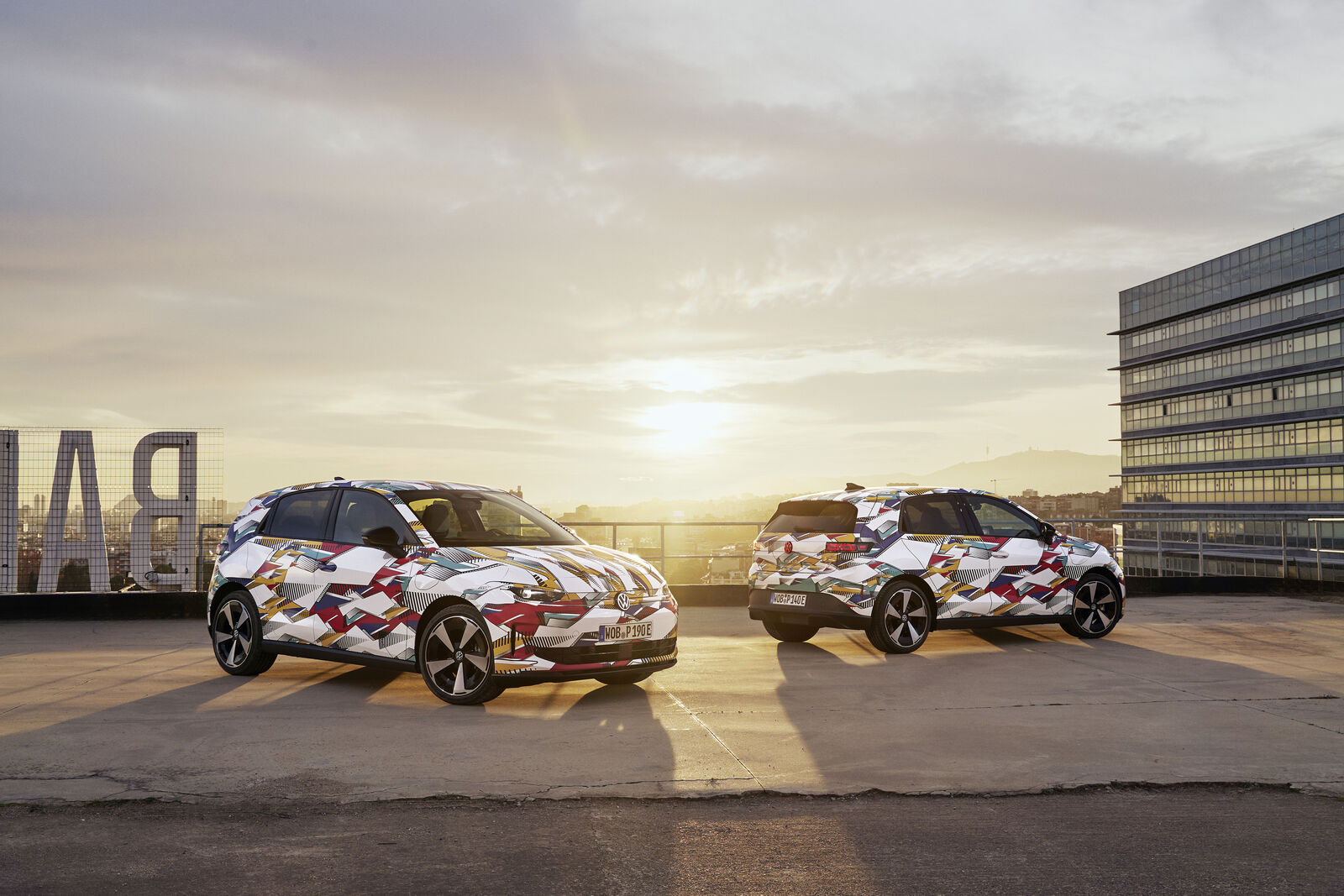
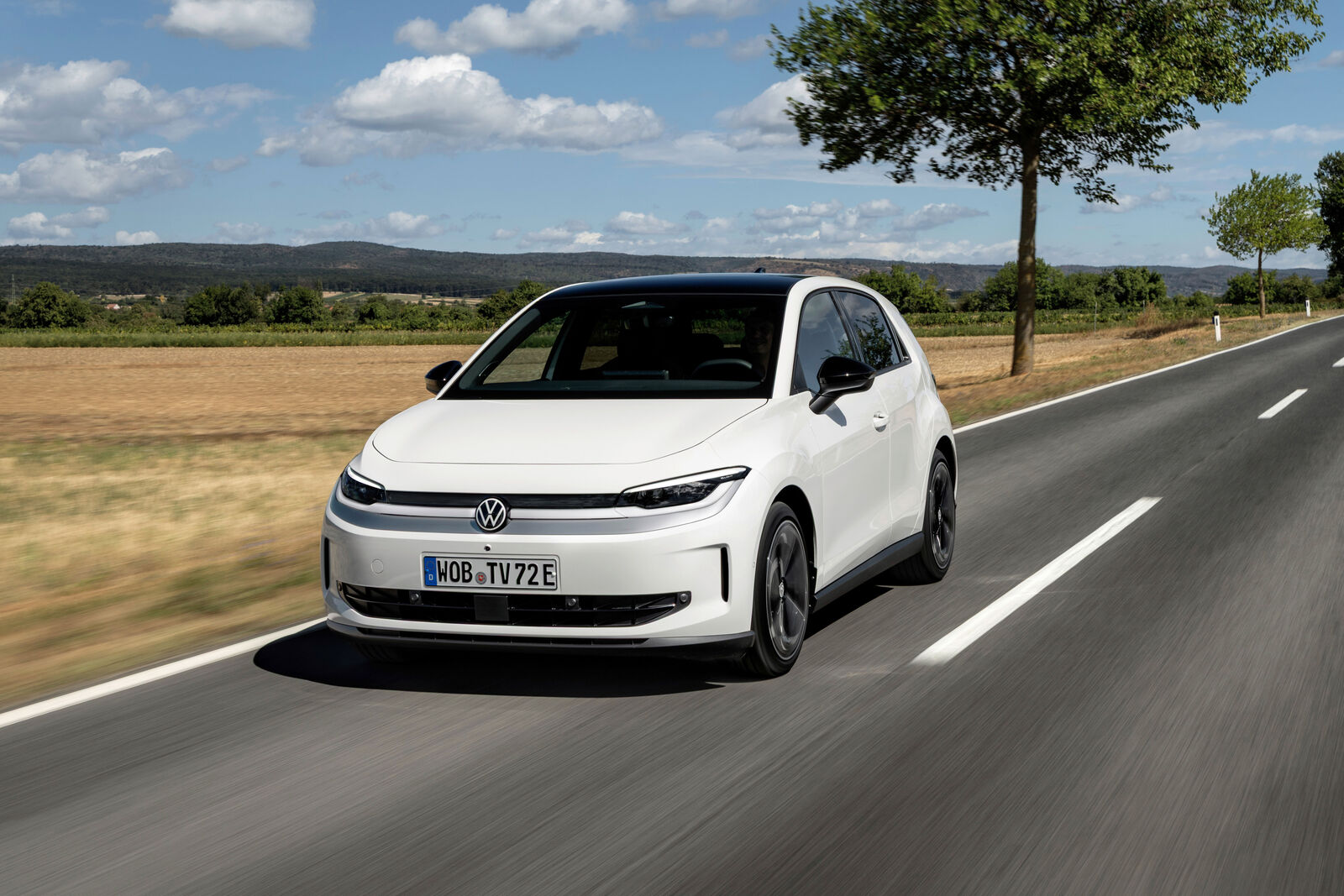
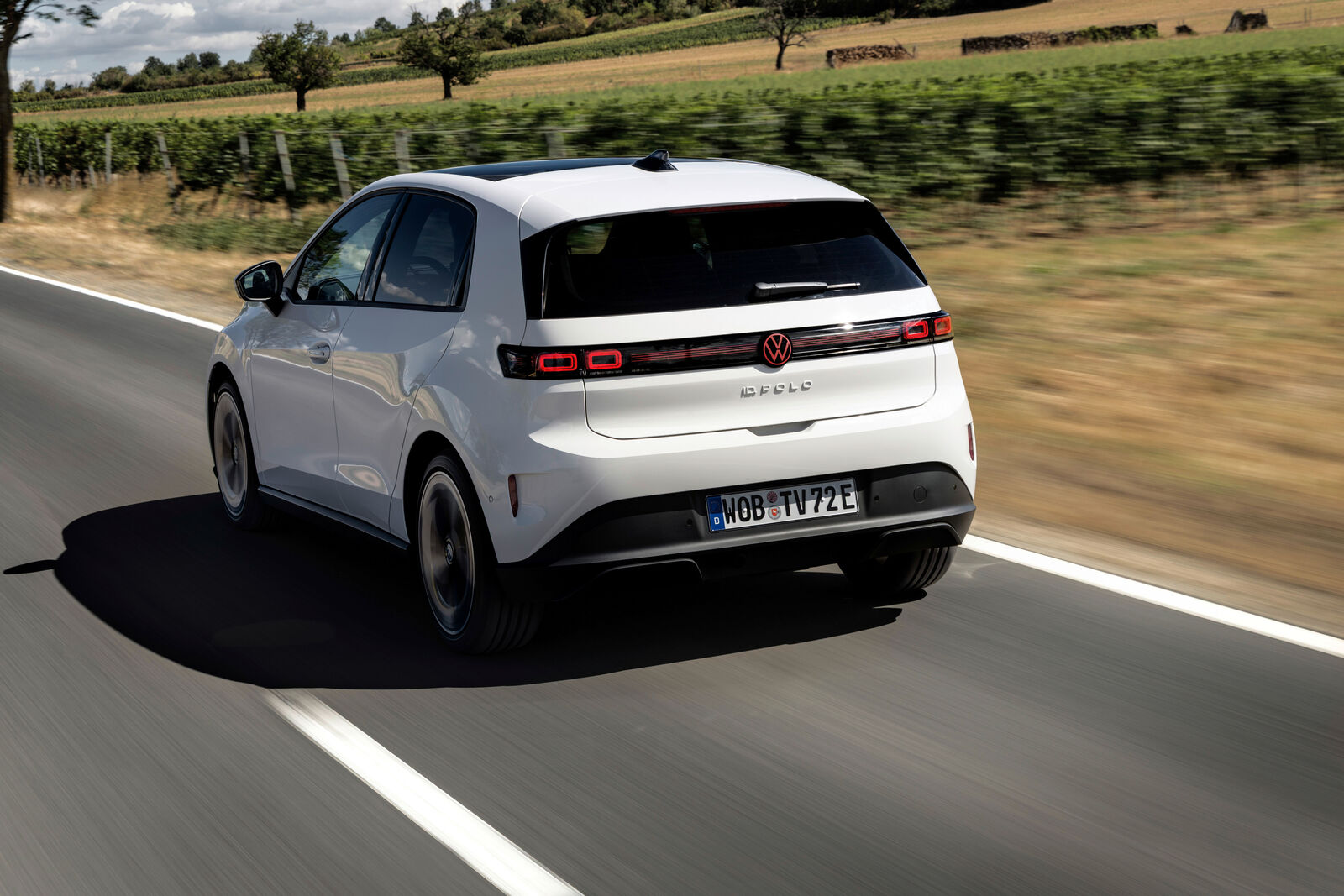
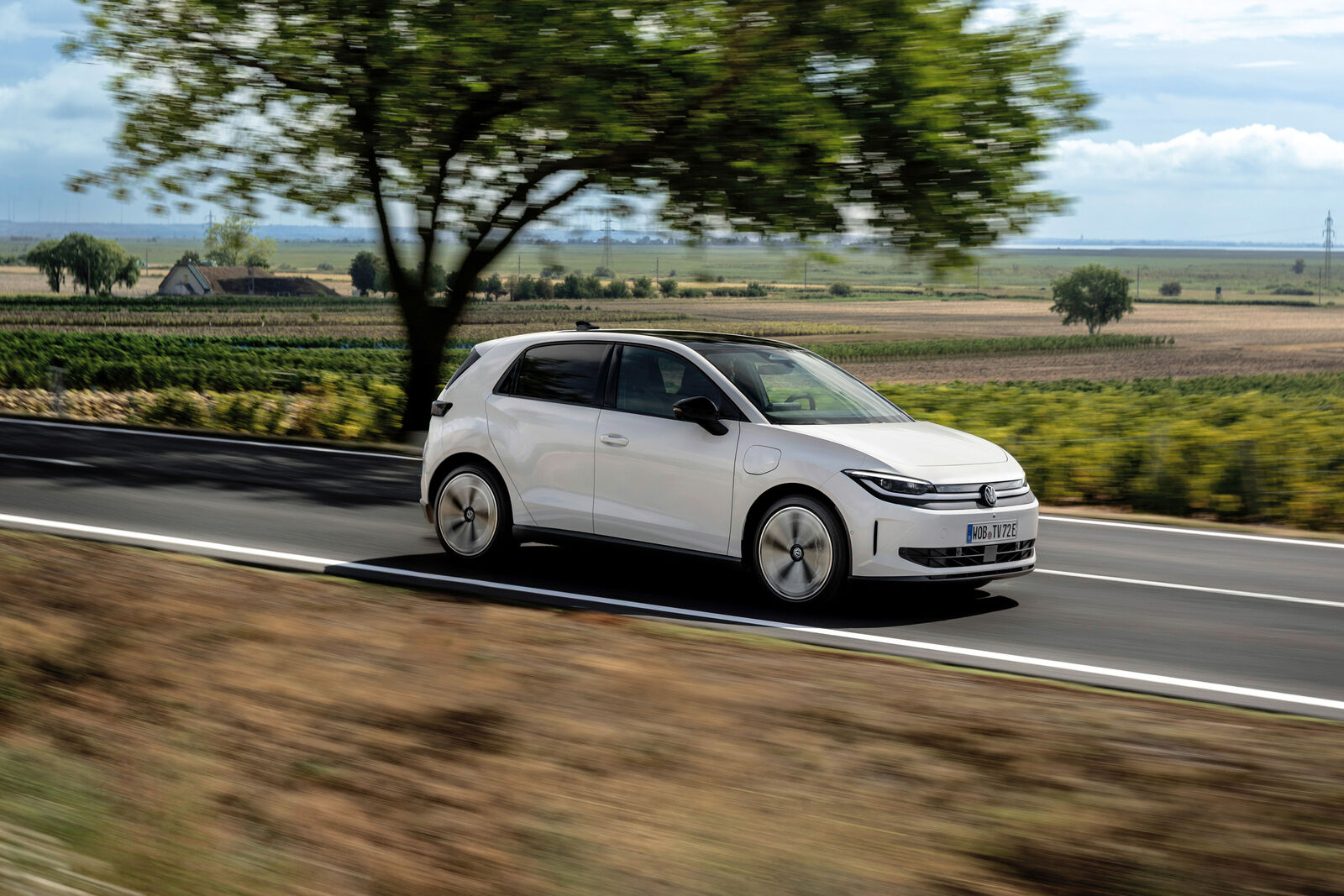
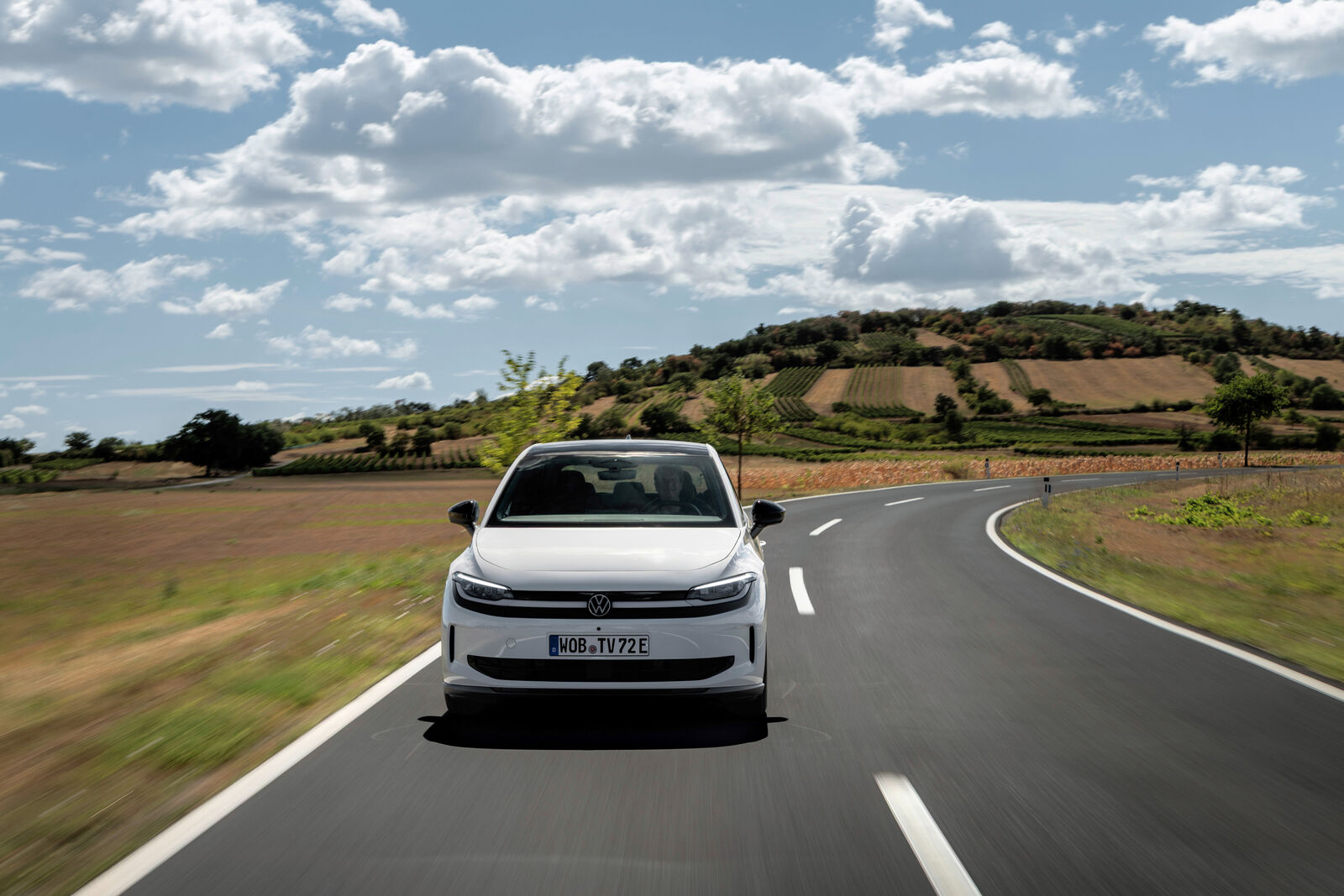
From concept vehicle to production model. In 2023, Volkswagen presented the Polo “ID. 2all”, This concept car was designed by Volkswagen Chief Designer Andreas Mindt. The design of the ID. 2all was so well-received by the public that more than 80 per cent of the concept vehicle’s design could be transferred to the production model. At the same time, the ID. Polo is also the first model to be designed on the basis of the Volkswagen Pure Positive design language developed by Andreas Mindt and his team. With its pure clarity and positive aura, this visual language transfers the brand’s design DNA into the future. Thanks to Pure Positive – which is already recognisable despite the camouflage – the ID. Polo embodies Volkswagen’s hallmarks of high quality standards, powerful stability and a likeable overall appearance. In addition, the vehicle is highly aerodynamic, with a best-in-class drag coefficient of just 0.264.
More space, more possibilities. The new ID. Polo based on the MEB+ is 4,053 mm long, 1,816 mm wide and 1,530 mm high; the wheelbase is 2,600 mm. For comparison, these are the corresponding values for the Polo with petrol engines based on the modular transverse matrix (MQB), which is being offered in parallel to the electric ID. Polo: 4,074 mm (length), 1,751 mm (width), 1,451 mm (height) and 2,552 mm (wheelbase). The exterior dimensions of both Polos are on a similar level. Nevertheless, the electric ID. Polo offers significant extra space thanks to the particularly compact drive modules of the MEB+. This means that the passengers have 19 mm more interior space available than in the classic Polo and this is particularly noticeable in the rear. The interior width and headroom have also increased. The luggage compartment volume has also expanded by 24 per cent – from 351 to 435 litres. When the rear seat backrests are folded down, the load capacity increases to 1,243 litres (Polo MQB: 1,125 litres). Thanks to this extra space, the four-door and five-seater ID. Polo is now more of an all-rounder than any of its predecessors, specialised in urban environments but equally at home far beyond the city limits and on trips with family and friends.
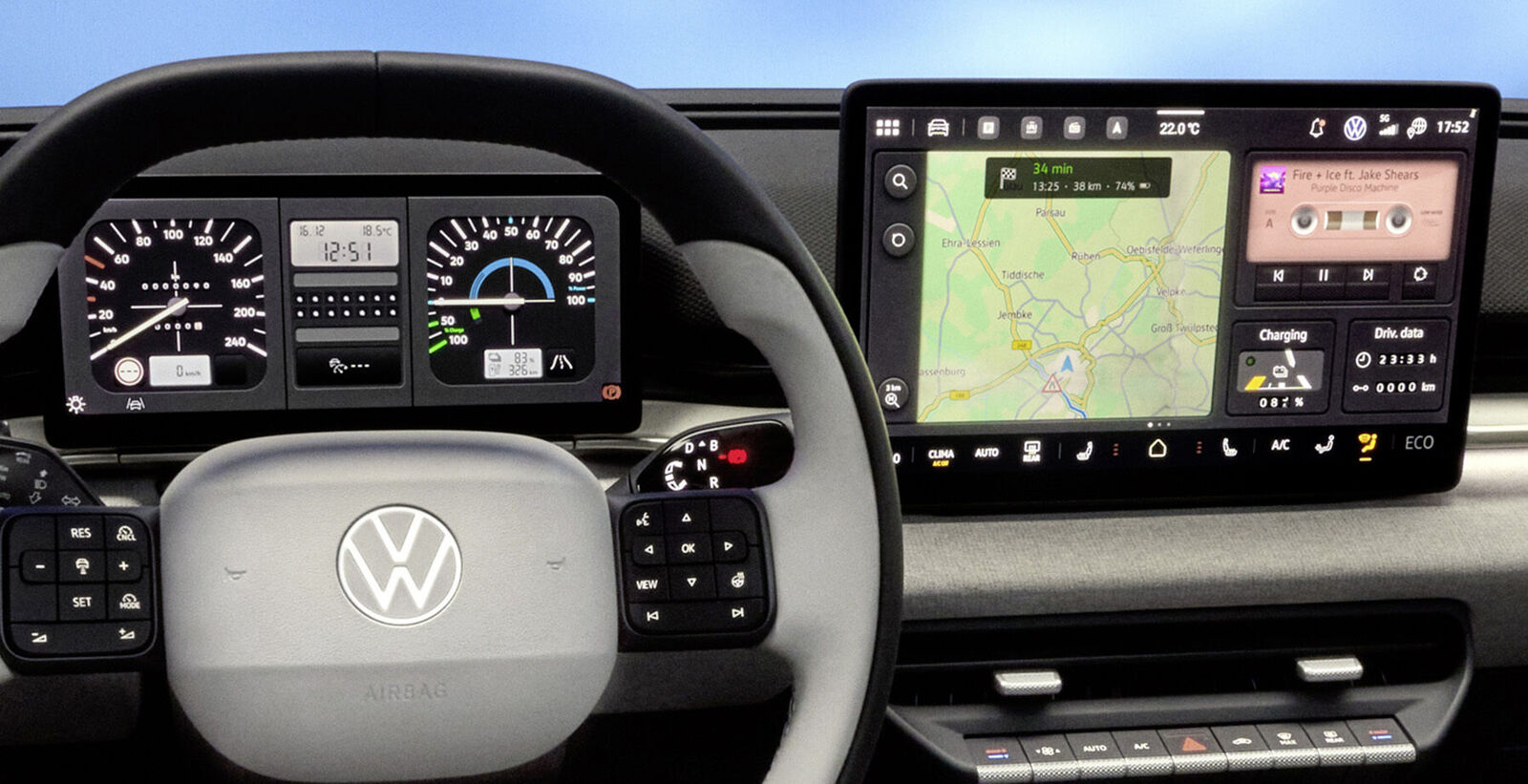
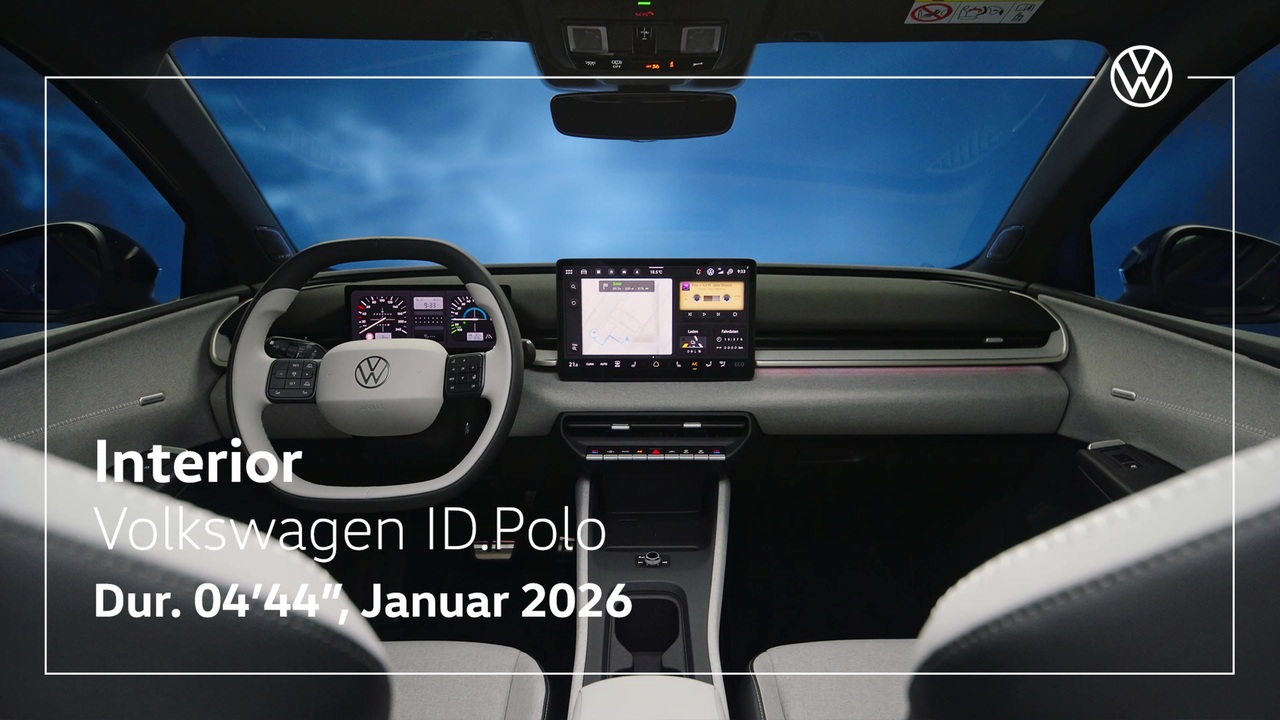
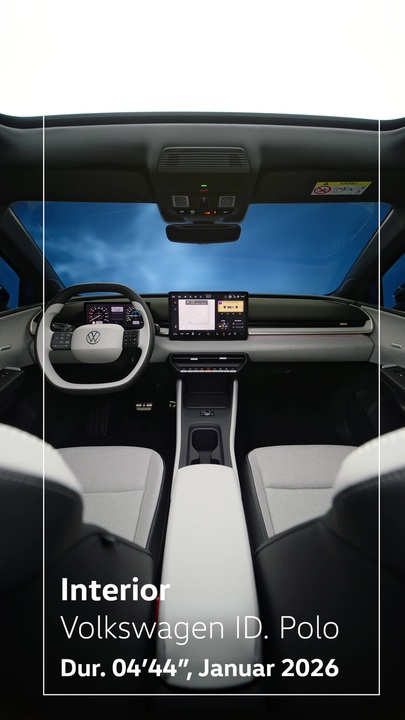
Feel at home on board. The Pure Positive design language is also reflected in the newly designed interior of the ID. Polo. Andreas Mindt: “With the ID. Polo, we wanted to create an interior that feels like a friend from the very first encounter. Clear physical buttons ensure stability and confidence, warm-looking materials make it really likeable, and loving details such as our new retro skins ensure that the unmistakable Volkswagen look shines through. The ID. Polo is a compact car with a big heart – Pure Positive in its purest form.” And indeed, never before has the interior of a compact Volkswagen been more intuitive to operate, more cleverly designed and more charismatic. The intelligent interior architecture, high-quality material feel, cleanly designed and ideally placed physical buttons and rotary controls, digital displays on one visual axis, innovative features such as the retro displays (depending on equipment) that bring a touch of nostalgia to the digital instruments (start with the look and feel of the Golf I Facelift) or the ID.Light, which enables intuitive interaction between vehicle and driver and is integrated for the first time not only in the dashboard but also in the front doors, as well as excellent ergonomics – it all combines to create an interior that immediately feels like home. And it is precisely this feeling of the car as a familiar friend, as outlined by Andreas Mindt, that has always been characteristic for a Volkswagen and is an integral aspect of the ID. Polo.
Quality without class limits. Ever since the fourth generation of the Polo (2001) and Golf (1997) came around (if not before), Volkswagen has been achieving a standard of quality and comfort in the small car and compact class that is based on the next higher class in each case. With the new ID. Polo, Volkswagen is also continuing with this approach. The class-spanning impression is characterised by details such as the robust and ergonomic door release levers from the new T-Roc, a fabric-covered instrument panel surface, the newly developed and easy-to-operate keypad on the multifunction steering wheel and optional features such as the high-end sound system from Harman Kardon and the electric seats with massage function available for the first time in a Polo.
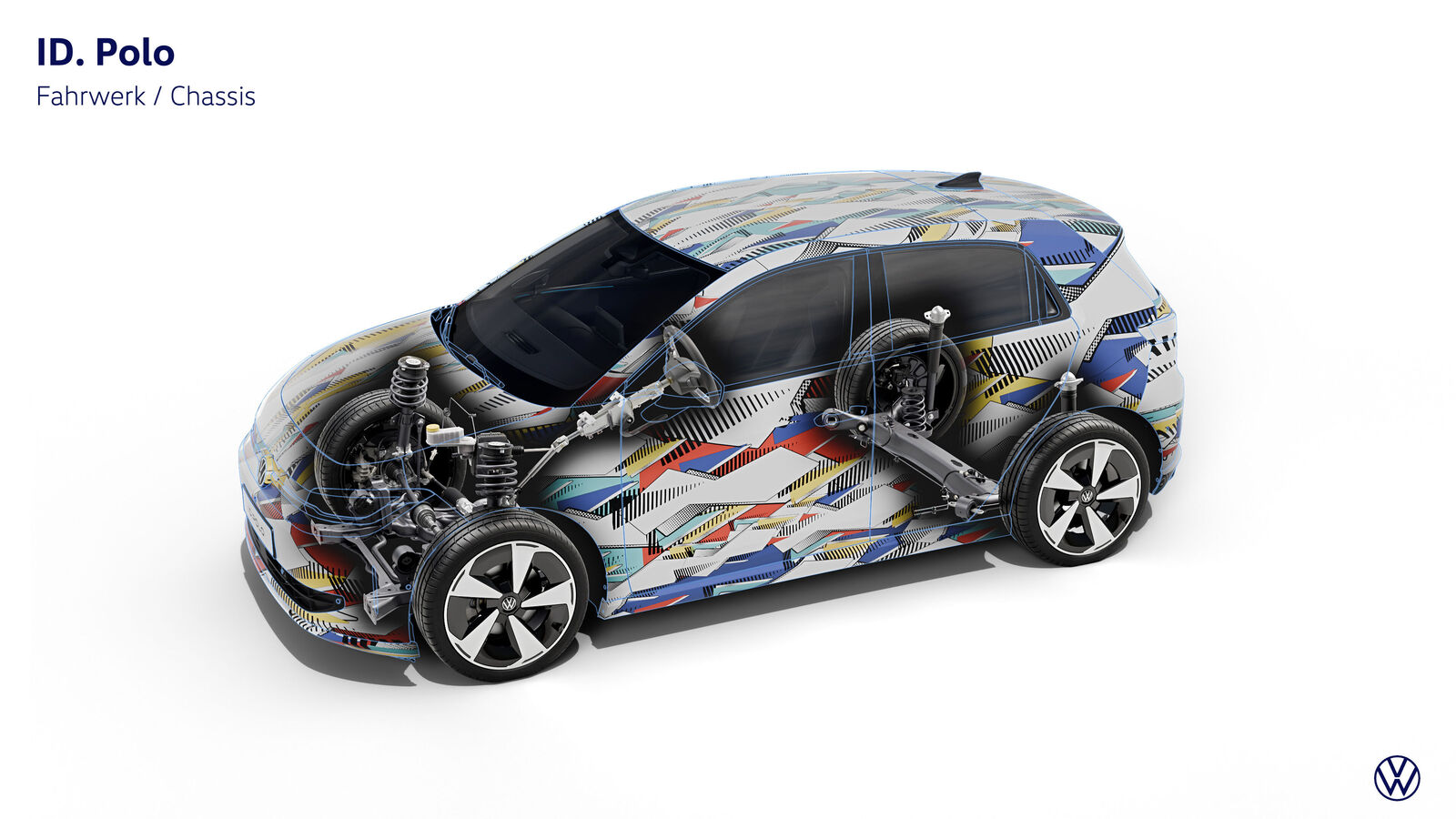
New front-wheel drive and new battery system. The ID. Polo is characterised by a front-wheel drive that has been developed completely from scratch, based on the next evolutionary stage of the modular electric drive (MEB) platform: the MEB+. Thanks to the completely new and particularly efficient electric drive, the complexity and thus the number of components and weight have been reduced – parameters that have made it possible for Volkswagen to lower costs and consumption. In addition, the electric front-wheel drive on board the ID. Polo offers clear advantages in terms of space. The drive system’s main modules include the new Volkswagen APP290 electric drive motor and the latest generation of power electronics also developed by Volkswagen. A new lithium-ion battery is housed flat in the underbody: the PowerCo unified cell from the Volkswagen Group. This uses what is known as cell-to-pack technology, where the cells are combined directly into a battery pack without the intermediate step via module housings. This reduces the price, installation space and weight, and at the same time increases the energy density by around 10 per cent. The advantage: greater range.
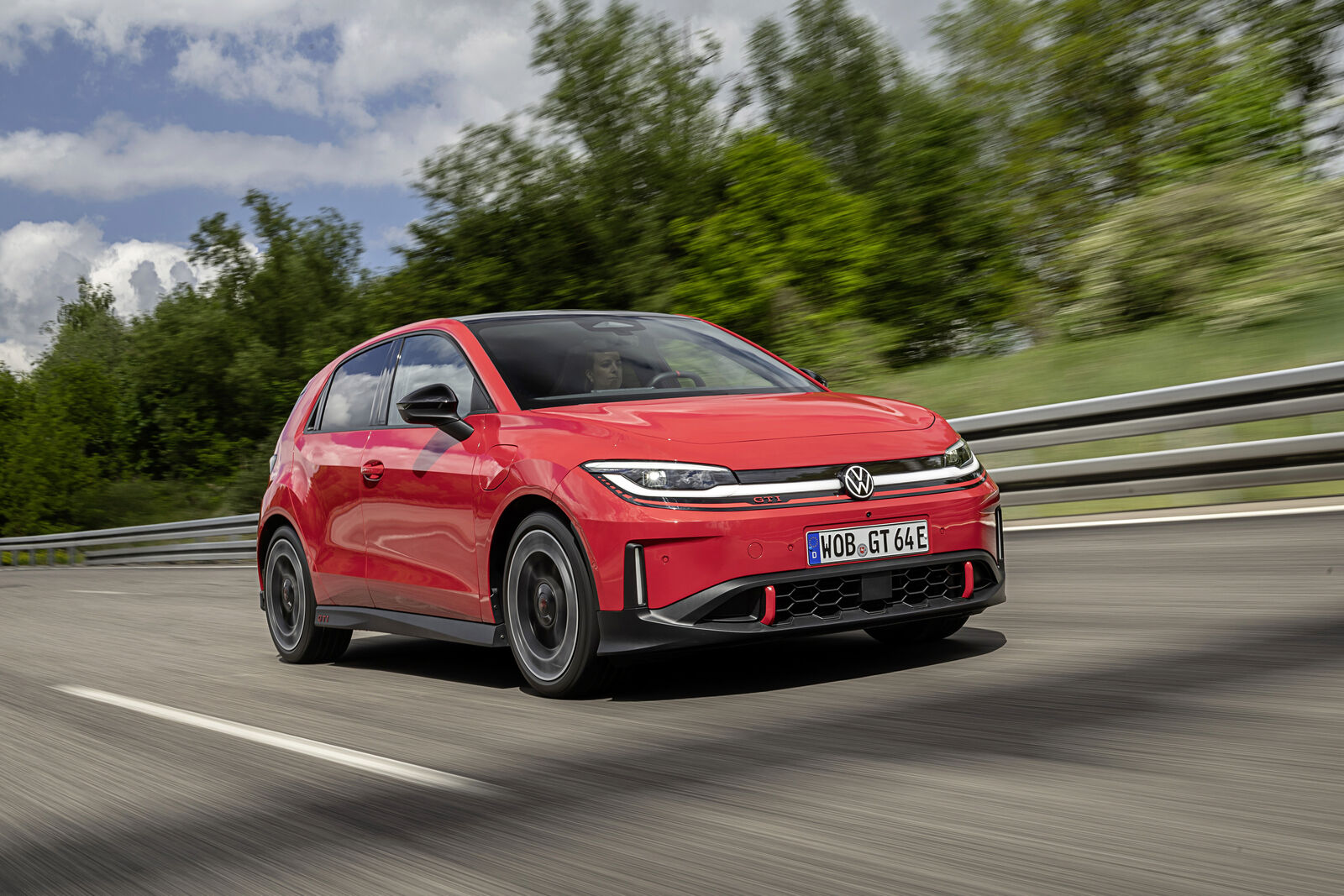
85 kW to 166 kW. For its debut, the ID. Polo will be available in three output levels: 85 kW (116 PS), 99 kW (135 PS) and 155 kW (211 PS). The ID. Polo GTI, a particularly sporty version with 166 kW (226 PS), will follow in the course of the coming year. The 85 kW and 99 kW versions will be equipped as standard with a 37 kWh (net) LFP version (lithium iron phosphate) of the new high-voltage battery. This battery can already be charged at DC quick-charging stations with up to 90 kW. The 155 kW and 166 kW drives will be powered as standard by an NMC version (nickel manganese cobalt battery) of the new PowerCo unified cell. This battery offers an energy content of 52 kWh (net), enables ranges of up to 450 km and can be charged at DC stations with up to 130 kW.
Automated driving functions. With the MEB+, not only the latest electric drive technologies, but also numerous next-generation assistance systems are making their way into the ID. Polo. This includes Travel Assist; the assist system enables assisted lateral and longitudinal guidance and assisted lane changes on motorways. As an innovation, Travel Assist in the ID. Polo will offer the new function of traffic light and stop sign recognition.