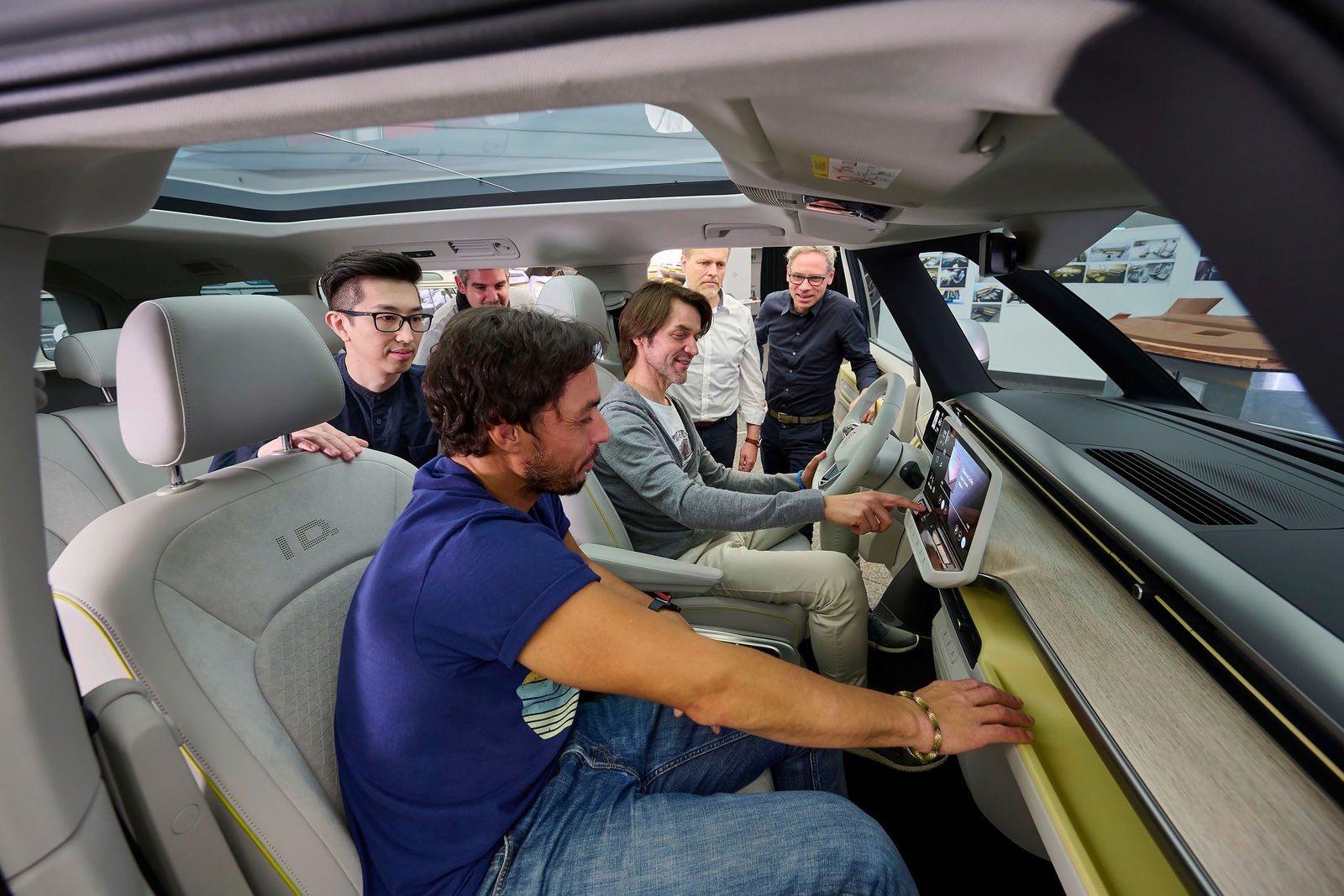
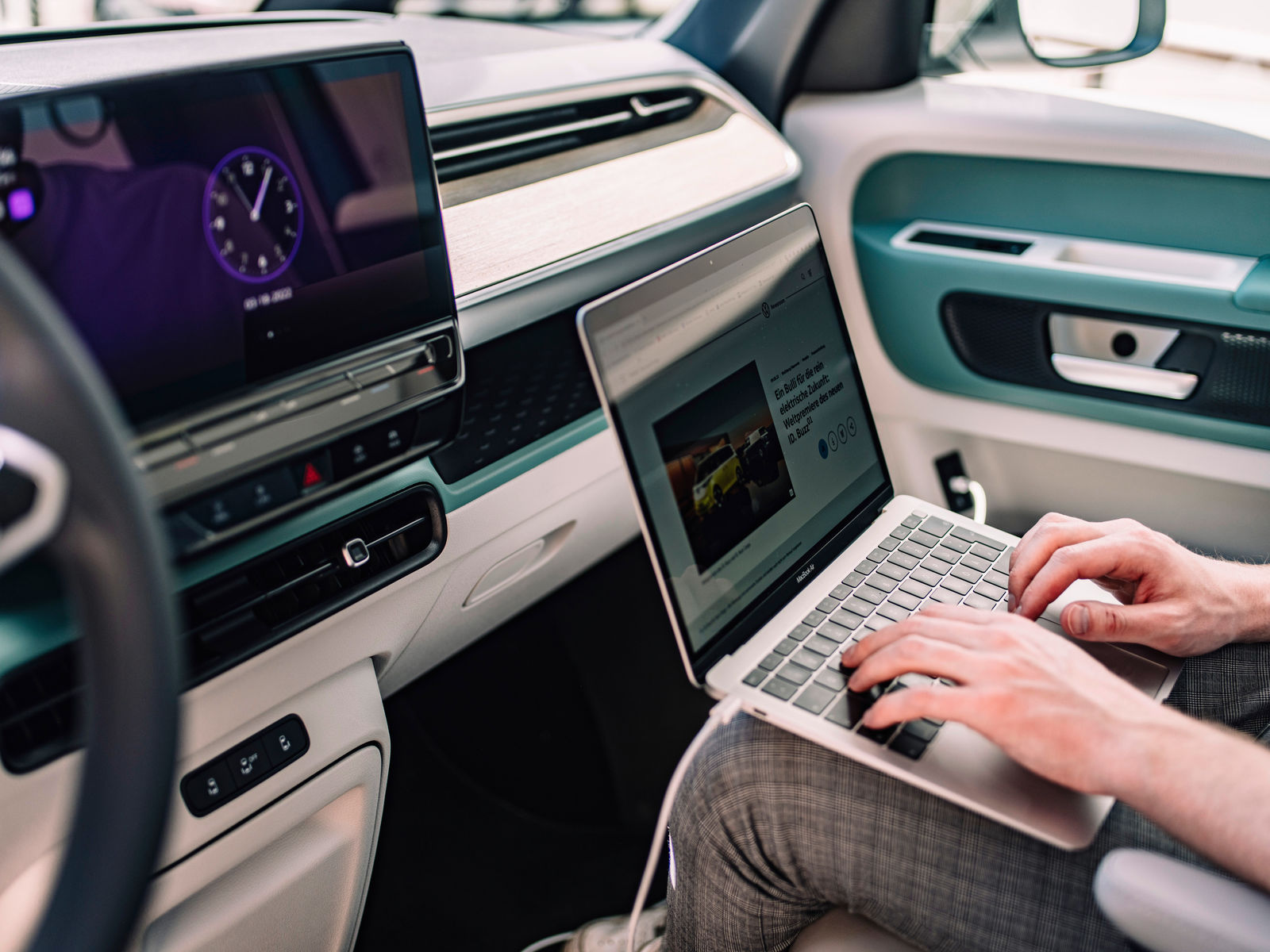
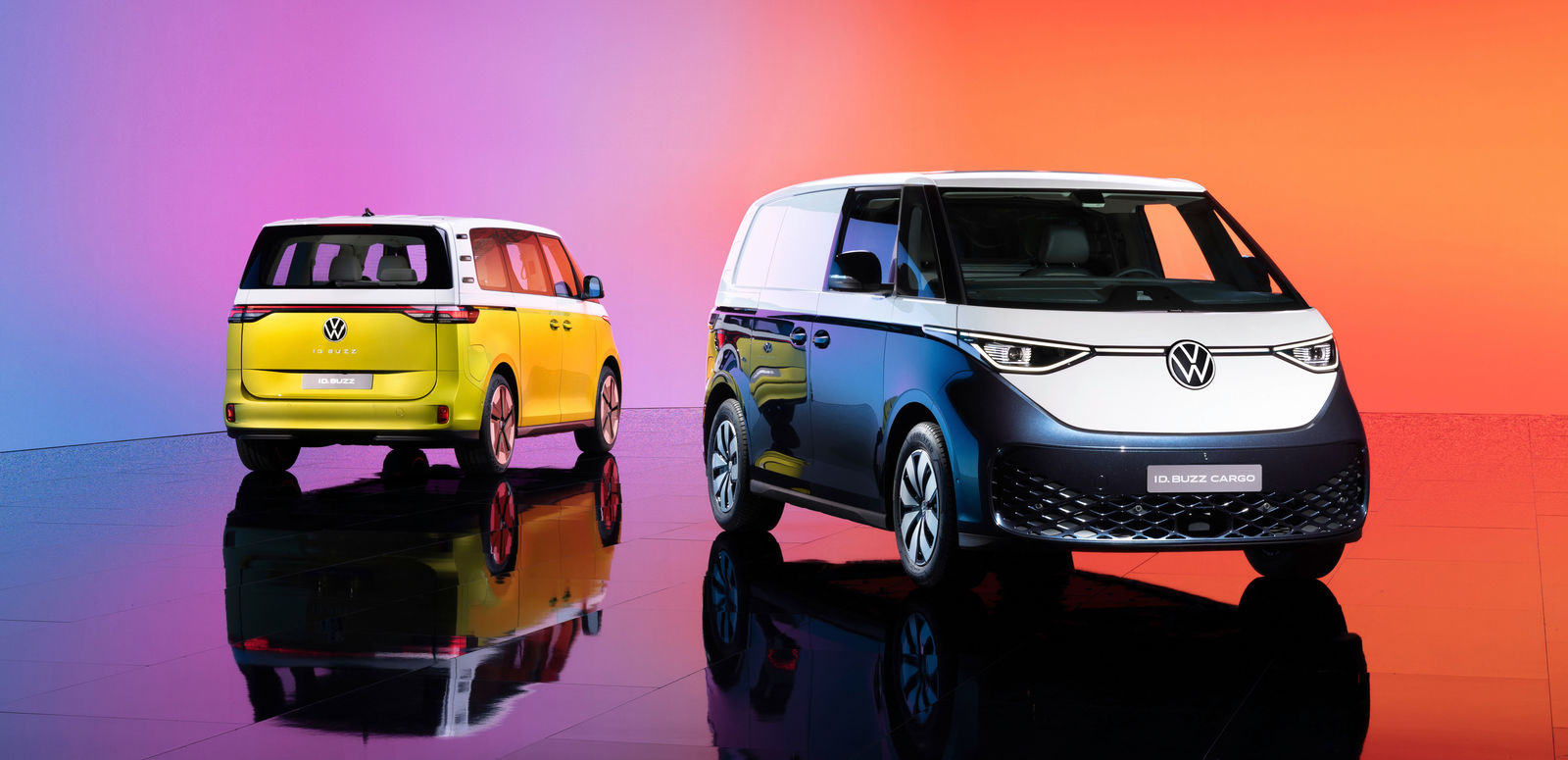
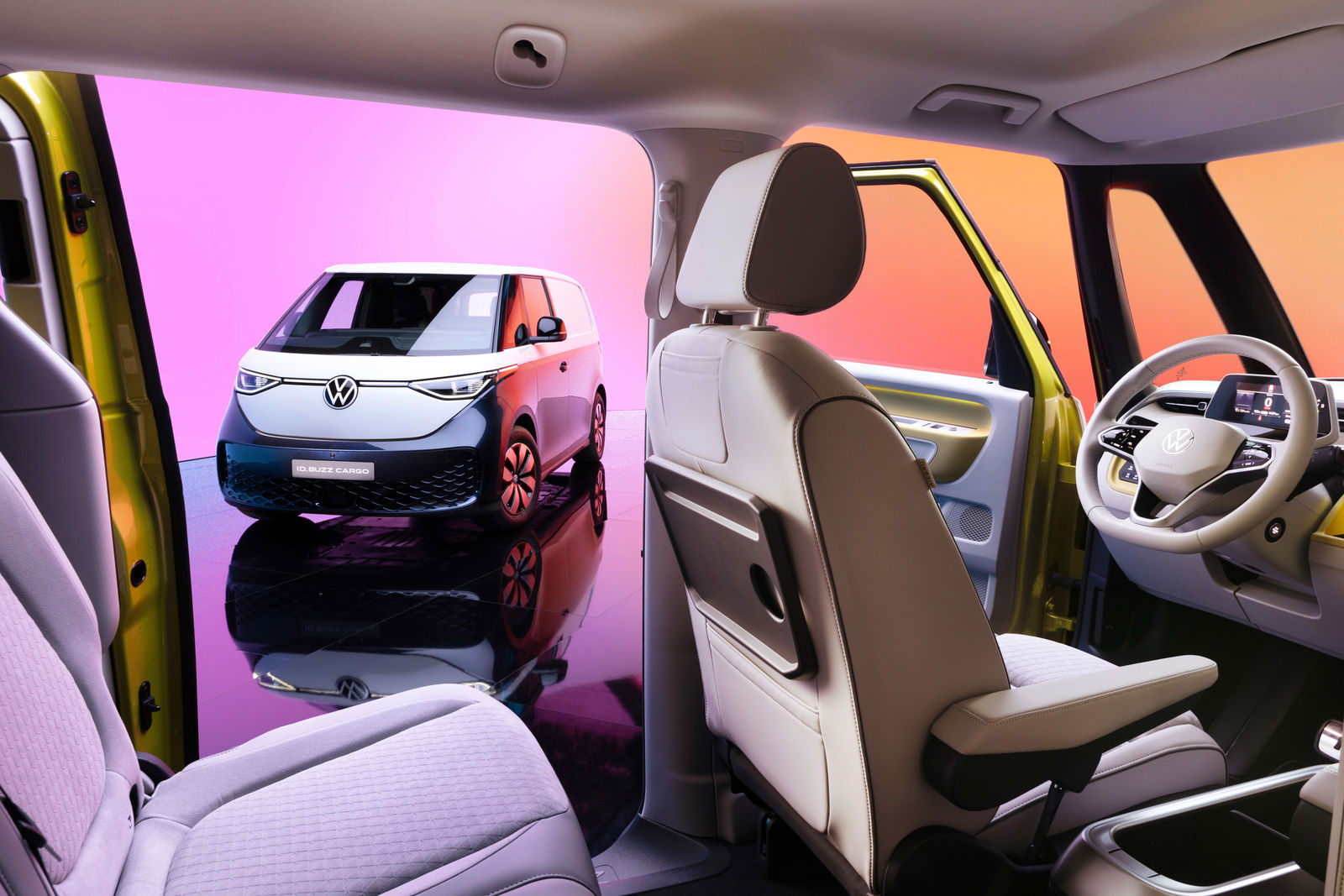
Interior with quiet lines. With its clarity, the design of the ID. Buzzand the ID. Buzz Cargo follows the genetics of the classic T1 – in its very own modern way. This philosophy becomes apparent in the interior, for example, in the linear dashboard – as in the T1 – with its quietly stacked elements, including the smart control concept with the multifunction steering wheel and both digital displays.
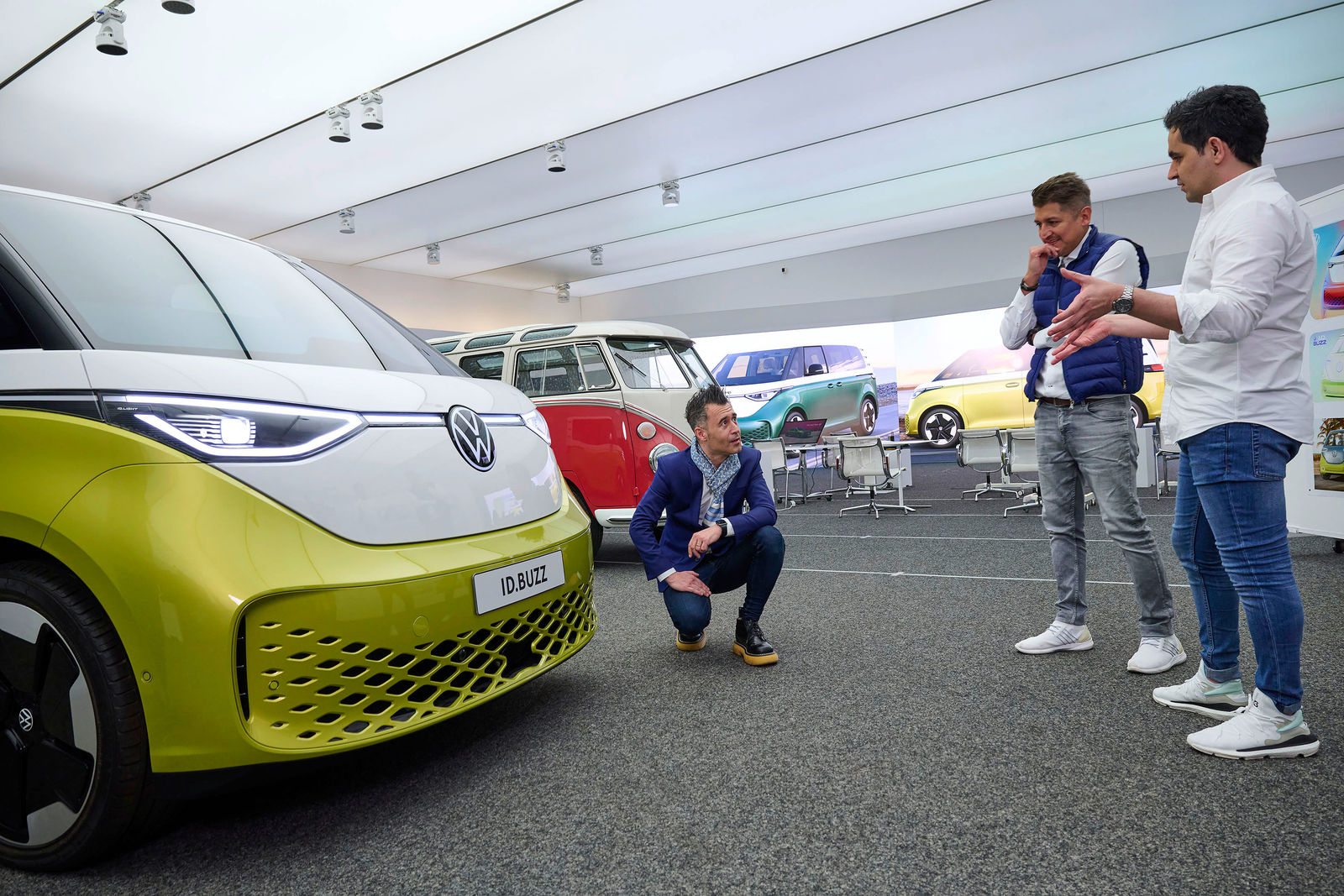
Generous open space. The compact electric drive and the battery integrated in the vehicle floor result in open space and a spatial concept with an abundance of room that puts the focus even more on people and their needs. It keeps plenty of room and numerous storage spaces and interfaces handy for the driver and passengers, and the sense of space is generous, light and airy. Jozef Kabaň says: “We developed a vehicle layout with a very logical and intuitive interior concept and a variable use of space.” The front seats in the ID. Buzzare located comparatively high, typical for the Bus, and equipped with armrests. The top model of the seats with its large number of setting options has been honored for its ergonomics by the Healthy Back Campaign (AGR).
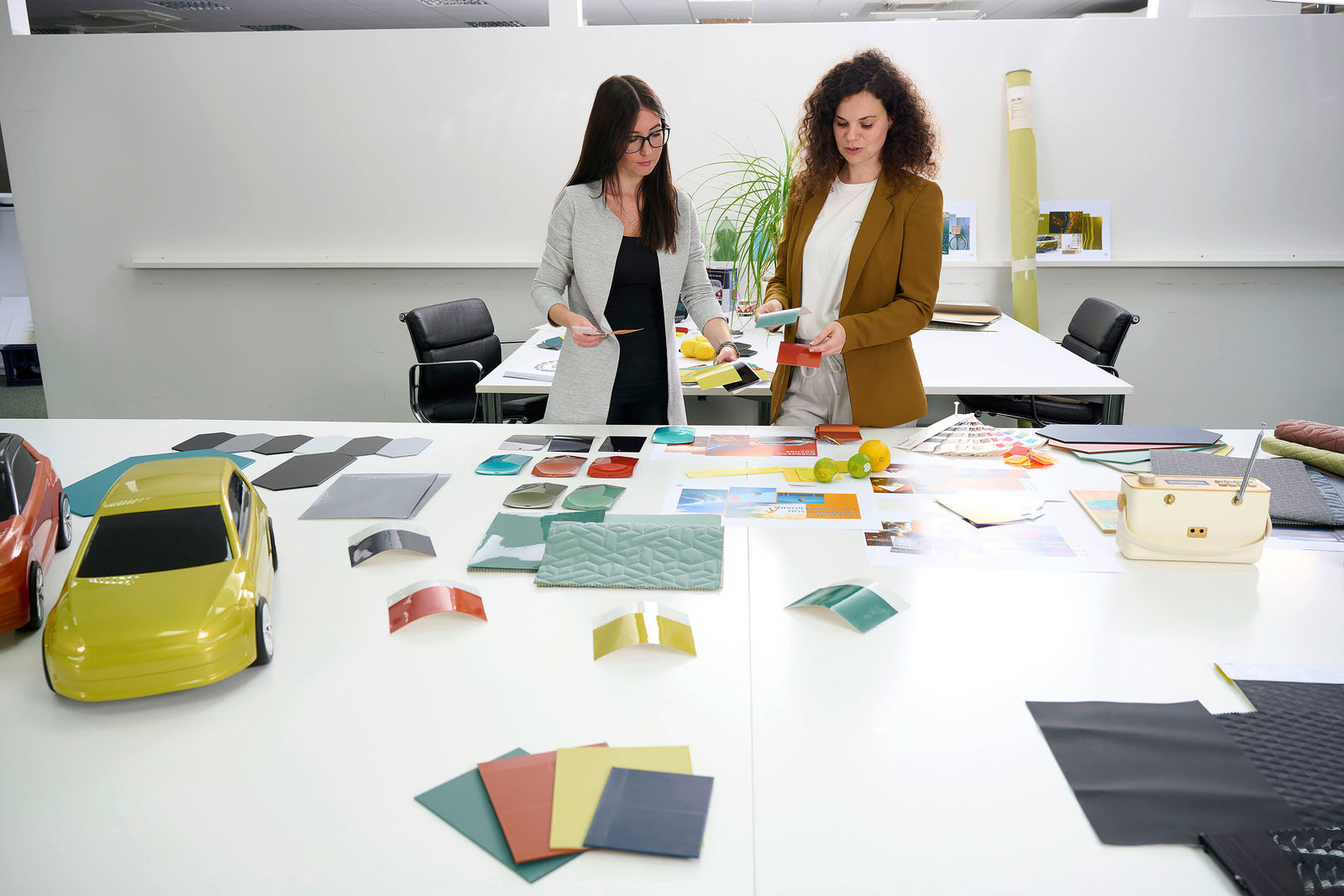
Lounge with style and charm. The interior of the ID. Buzz conveys an impression that is at the same time high-quality, chic and cozy – like a modern lounge. Tomasz Bachorski, Head of Volkswagen Interior Design explains: “It was our goal to bring our customers’ home into the vehicle interior. And this in every aspect, from the materials to the digital equipment that you’re used to at home.” Close attention was paid to the interplay of function, color and materials. In the optional “Style” interior packages, the colors correspond to the outside paintwork, and the cool shade “Electric White” adds a nice touch. An especially endearing detail can be found in the side and seat trim of the five-seater, where stylized silhouettes of the ID. Buzzare embossed. Ten-colored ambient lighting is standard; a variant with 30 colors is optional.
In perfect harmony. Design and function have to harmonize perfectly in every detail, as Doreen Langner from CAD Interior Design explains, using ambient light as an example. “We check with the help of the design data on the computer how the light is displayed in the vehicle. And if it is reflected in the windshield, we have to adjust the design on the dashboard so that the light is absorbed and doesn’t disturb the customer.