- At 6.8 billion euros, operating result in 2025 close to prior year level in spite of external negative effects
- Noticeably lower fixed costs through performance programs and implementation of wage agreement – further efficiency increases nevertheless necessary
- Realignment of the Brand Group Core Board of Management brings leaner processes and decision-making paths and simplifies steering from 2026
- Electric Urban Car Family with new models such as the ID. Polo and ID. Cross from 2026 make e-mobility even more affordable for many customers
Brand Group Core on track despite special items; new steering model gives additional boost in 2026
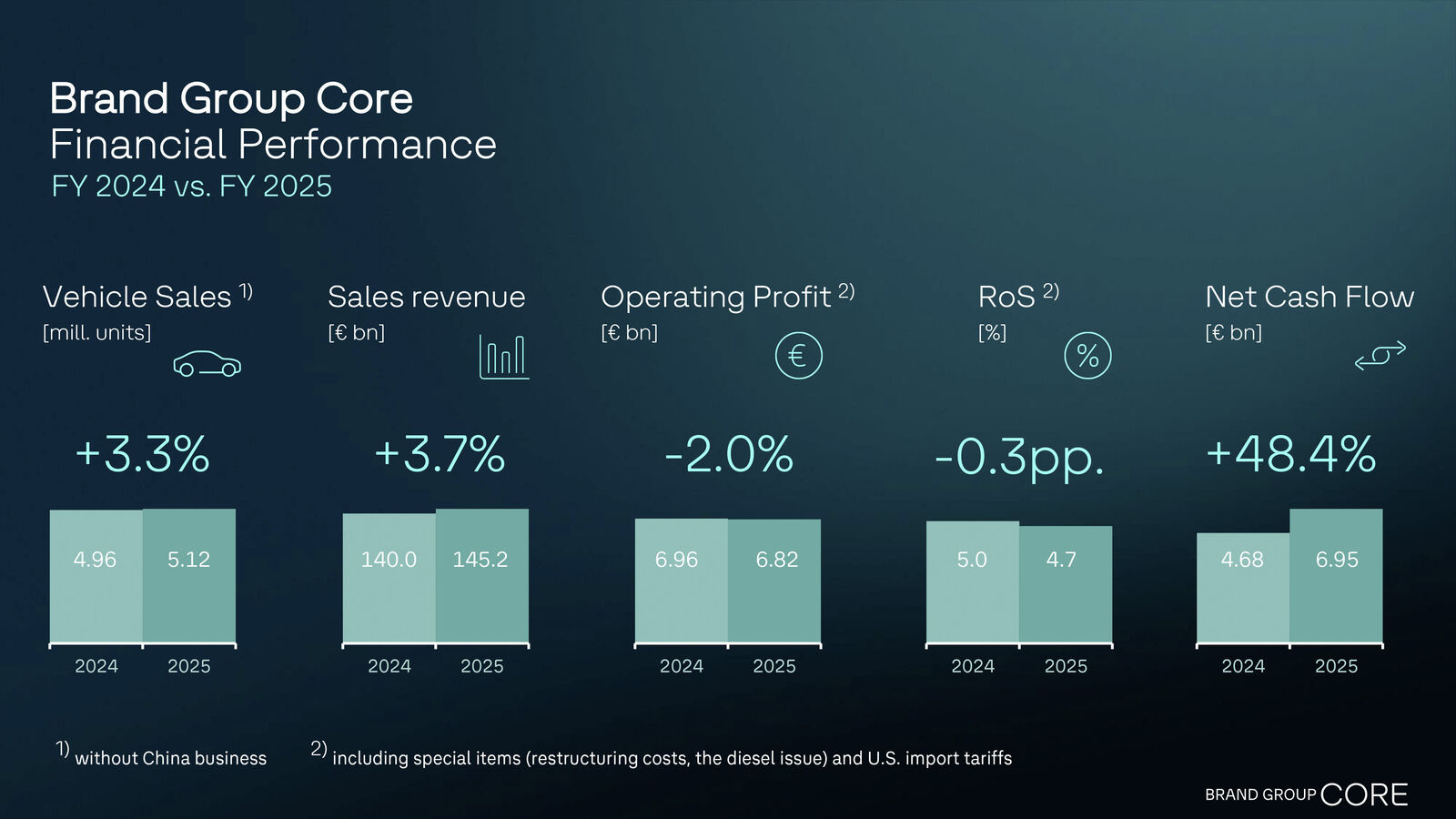
The Volkswagen Group’s Brand Group Core (BGC) implemented its strategic goals as planned in 2025 – and reported an operating result of 6.8 billion euros – close to the prior year level despite significant negative special items. Adjusted for additional expenses for restructuring, the diesel issue and U.S. import tariffs, the operating result for 2025 came in at 8.2 billion euros – in line with the set target.
In strategic terms, 2025 was a significant year in which the foundations for increased efficiency and more competitive products were laid. Nevertheless, resilience must be further strengthened in 2026. For this reason, Volkswagen, Škoda, SEAT&CUPRA and Volkswagen Commercial Vehicles are streamlining their organizational structures with a new cross-brand steering model – thereby creating potential for further savings.
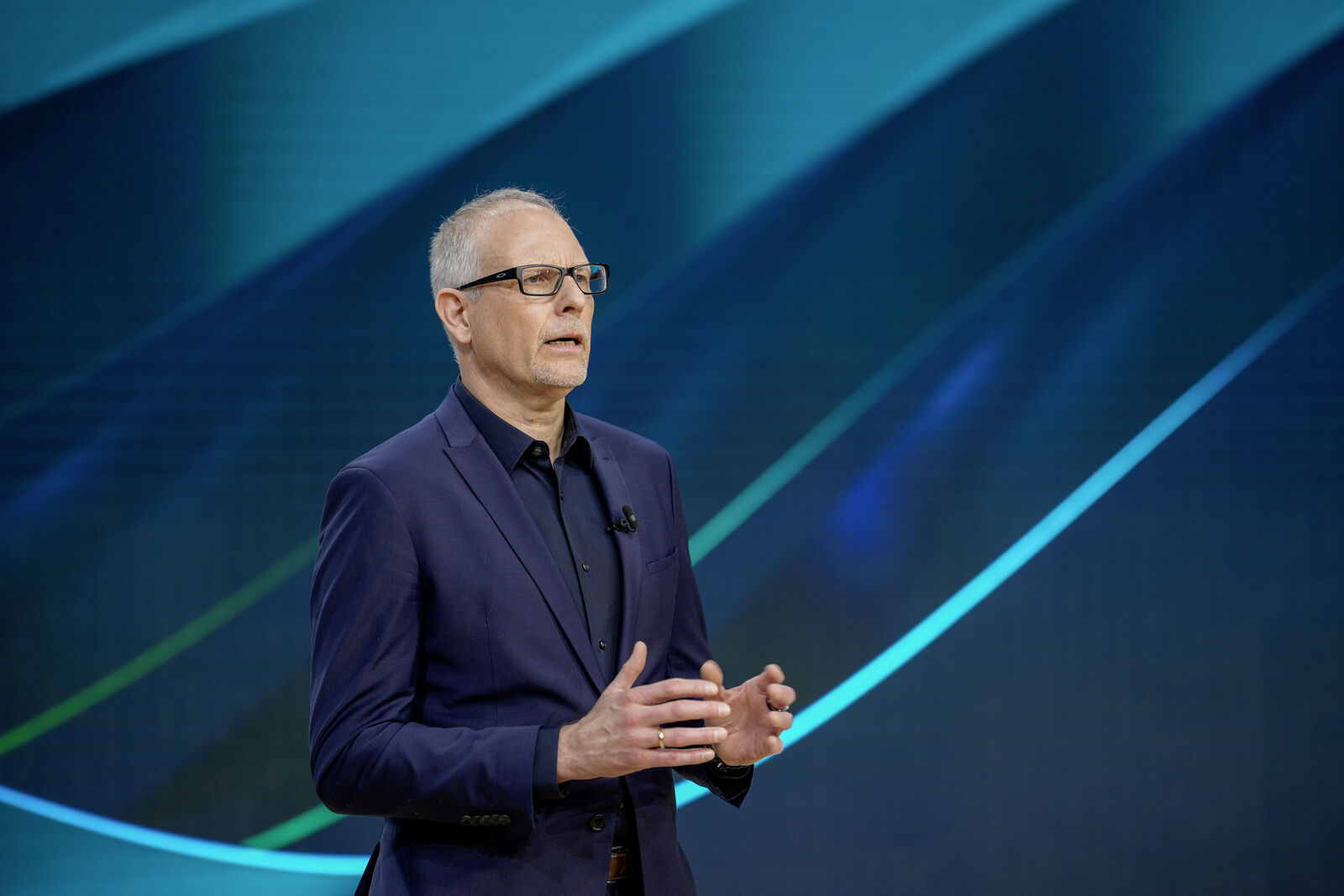
“We consistently delivered in 2025. The lasting impact of the structural improvements under our performance programs is unfolding. At the same time, important steps still lie ahead of us in terms of our return. Factors such as the U.S. tariffs highlight the fact that we must improve our resilience further. That is precisely what our new governance will achieve: leaner structures, swifter decision-making and increased efficiency – without diluting the identity of our strong brands. This is the key to long-term competitiveness.
Overall, we are on track, but we are still a long way from the finishing line.”
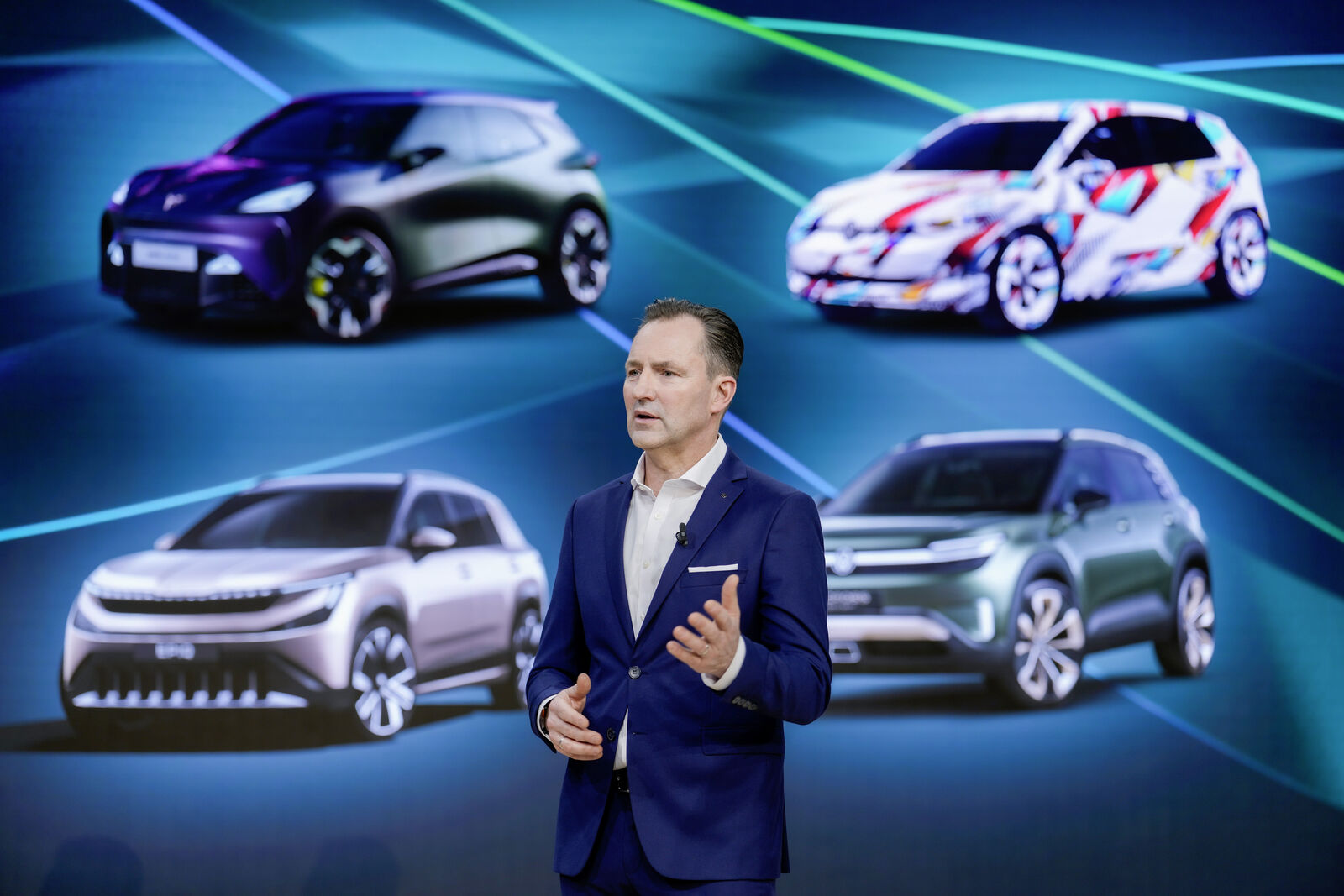
Thomas Schäfer, Member of the Group Board of Management, CEO of the Volkswagen Passenger Cars Brand and Head of the Brand Group Core
Key figures Brand Group Core (Jan. – Dec. 2025)
| Brand Group Core vehicle sales rose to 5.12 million (2024: 4.96 million) | Solid 3.3% year-on-year growth in vehicle sales. This is primarily due to good business development in the home market of Europe and the strong market share in the BEV segment. | ||
| 3.7% growth in Brand Group Core sales revenue to 145.2 billion euros (2024: 140.0 billion euros) | Growth driven by successful model launches and improved product mix across all four brands. | ||
| Brand Group Core operating result came in at 6.82 billion euros (2024: 6.96 billion euros) | The operating result was only marginally lower than the previous year – but was impacted by special factors such as restructuring costs, the diesel issue and U.S. import tariffs. | ||
| Brand Group Core operating margin of 4.7% (2024: 5.0 %) | The 0.3 percentage point decrease is due to external special effects. Excluding these factors, the Brand Group Core operating return would have been 5.6% - and therefore in line with original expectations. | ||
| Net cash flow increased by | The marked rise in net cash flow underscores improved capital efficiency and successful working capital management. Strategically necessary investments in future technologies and in model ramp ups were realized. | ||
“We strengthened the financial basis for the Brand Group Core significantly in 2025:
lower factory costs and overheads and the 2024 wage agreement show clearly measurable progress. Adjusted for external special items, we are right on track operationally. At the same time, we must stay realistic: the headwind from tariffs will not go away. That is why we are ramping up our performance programs.
With the new cross-brand steering model in production, procurement and development we will be giving efficiency and investment discipline a further significant boost in the coming years.
That will make 2026 a year of consistent financial and operational discipline – and lays the groundwork for the successful production start of our new Electric Urban Car Family.”
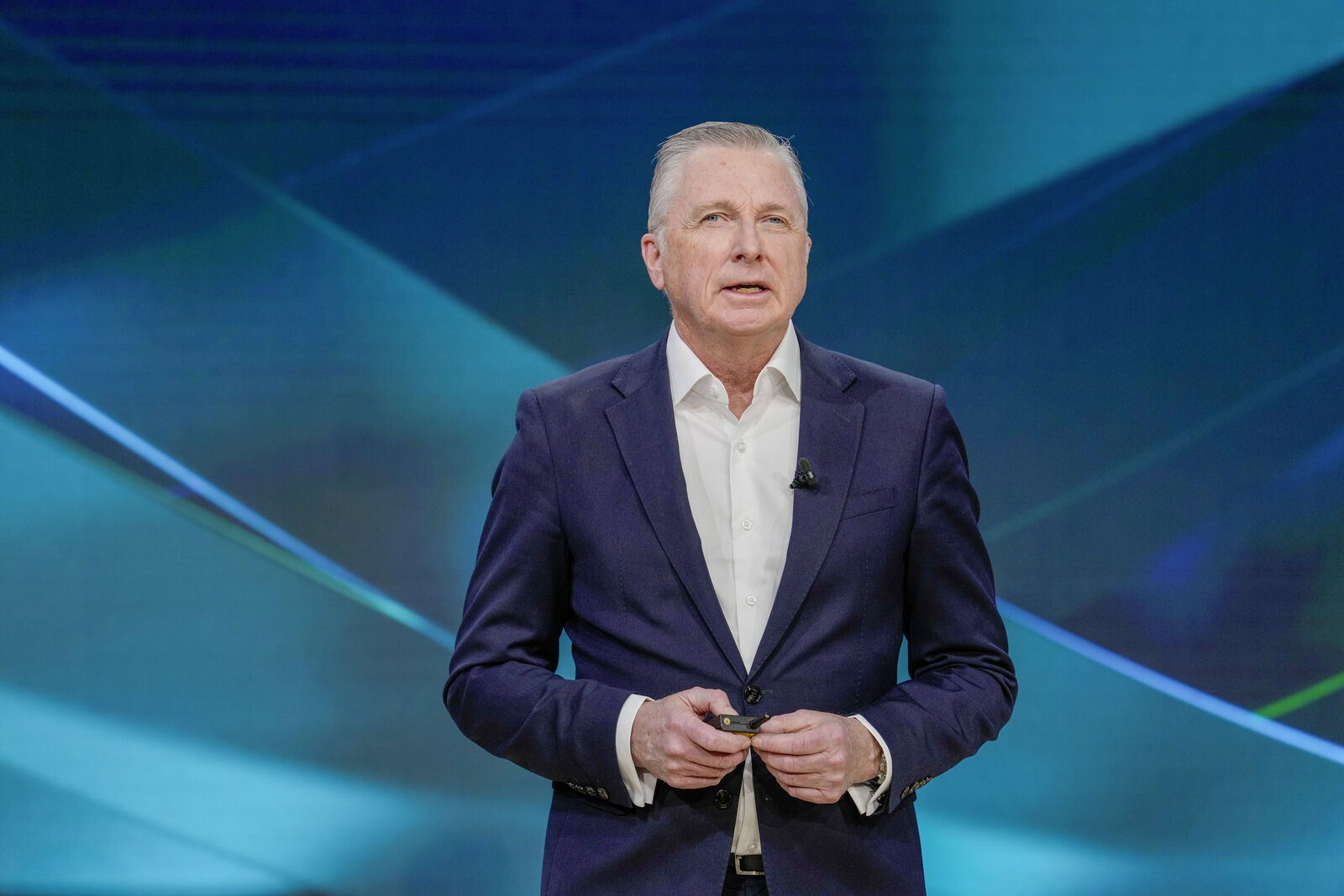
David Powels, CFO Volkswagen Passenger Cars & Brand Group Core
Review
The Brand Group Core further consolidated its position in 2025 despite a difficult market environment. The strong, clearly positioned brands in the BGC successfully held their ground in an environment shaped by new U.S. import tariffs, stagnating European markets, geopolitical tensions, growing competitive pressure from China and generally slower BEV growth. The increases in vehicle sales and sales revenue therefore underscore the attractiveness of the BGC model range.
At the same time, the efficiency measures that have been initiated show a significant impact: overheads and factory costs were sustainably reduced, process optimizations in production and development increased performance, and product costs were lowered through standardization and less complexity. As planned, the R&D ratio remained below the strategic target of 4%.
Business in the regions presented a mixed picture: business in Europe remains strong and requires focused market cultivation. Overall, the dynamic in South America is positive, while the North American market remains challenging,
Outlook
In 2026, the Brand Group Core will continue to pursue its consistent course towards closer cooperation and increased efficiency. Efforts will focus on optimizing cross-brand processes and expanding joint initiatives.
The new steering model strengthens overarching management, while the brands preserve their clear identity for customers. Going forward, the increase in cross-brand development scope will raise the efficiency level of the BGC’s total investment. The basis for this will be a leaner, more efficient “powerhouse” with closer cooperation in production, procurement and development.
A central project for the Brand Group Core in 2026 is the Electric Urban Car Family with four models from the Volkswagen, CUPRA and Škoda brands debuting on the market, making e-mobility even more affordable for many customers.
The starting price for the Volkswagen ID. Polo will be around 25,000 euros – the CUPRA Raval and Škoda Epiq will target additional customer groups. From their base in Spain, SEAT&CUPRA will lead this joint project. Compared with the previous approach, development of the cross-brand platform brings savings of some 650 million euros over the term of the project. It is planned to produce several hundred thousand units per year. The economies of scale achieved in this way will close the margin gap between BEVs and ICEs still further.
The newly-structured Brand Group Board of Management that came into effect in January 2026 will make processes, structures and decision-making paths significantly leaner.
Clear responsibilities and faster decision-making processes strengthen the Brand Group’s competitiveness. The new governance has an impact on the Production, Technical Development and Procurement units in particular.
In Production alone, the approved reorganization of the steering model unlocks cumulative savings potential of one billion euros through 2030.
Going forward, the new regional managers will be responsible for cross-brand and cross-national planning, steering and logistics. This will make the regions more independent, more efficient and more flexible.
Cross-brand projects also increase efficiency in development: duplicated development work is avoided, development cycles are shortened and budget funds are allocated more effectively – while maintaining consistent quality and clear brand differentiation. At the same time, the Brand Group Core is strengthening its global competitiveness in 2026 by optimizing sales performance, improving working capital and designing an after-sales plan to increase service profitability.
In parallel, the Volkswagen brand is launching the largest model initiative in its history under its “Volkswagen Boost 2030” strategy. The package of measures comprising the performance program and the 2024 wage agreement lays the foundation for a stable earnings situation and a return on sales of more than 4% in 2026.
Overview of the brands in the Brand Group Core
Volkswagen Passenger Cars
Volkswagen Passenger Cars delivered 3.10 million vehicles in the 2025 fiscal year (excluding China, including external manufacturing), broadly in line with the prior year level (-0.2%). Sales revenue ran at 86.57 billion euros. The operating result grew 1.0% to 2.61 billion euros. In total, special items such as restructuring costs, the diesel issue and U.S. import tariffs had a negative effect of 1.3 billion euros on the result. By contrast, there was significant success in reducing costs: lower overheads achieved through the consistent implementation of the performance programs and the impact of the wage agreement largely offset the above-mentioned negative external effects.

“For Volkswagen, 2025 was a year for catching up. We focused on what our brand stands for: quality, intuitive usability and clear product identity.
Our successes in Europe prove we are on the right track. With the largest model offensive in our history, we are taking the decisive step forward in 2026 – at a starting price of 25,000 euros, the ID.Polo will make e-mobility accessible to many people. We have listened. We have caught up. And now we are delivering.”
Thomas Schäfer, Member of the Group Board of Management, CEO of the Volkswagen Passenger Cars Brand and Head of the Brand Group Core
Volkswagen Commercial Vehicles
Volkswagen Commercial Vehicles made an important contribution to Brand Group Core
performance in 2025. In a challenging market environment, the brand grew deliveries to 428,000 vehicles and sales revenue rose to 16.9 billion euros. Due to significant negative effects on earnings, the operating result came in at 245 million euros. For 2026, VWN is focusing on comprehensively refreshing models, new derivatives and technology updates to further strengthen volumes and profitability.
“All in all, Volkswagen Commercial Vehicles was able to increase market share significantly in 2025 in a declining overall market. We continue to be the clear leader in twelve European markets, including our home market of Germany. With a market share of 25 percent, the ID. Buzz remains the undisputed market leader in its segment in Europe.
Our consistent work on costs and our spending restraint are also making inroads. We are right on track with our efforts to reduce personnel costs.”
Stefan Mecha, Chairman of the Board of Management of the Volkswagen Commercial Vehicles Brand

SEAT/CUPRA
Driven by the CUPRA portfolio, SEAT&CUPRA vehicle deliveries grew 3.2% in 2025 to an all-time record of 657,400. The company’s electrification strategy is successful, as is confirmed by the strong demand for PHEVs and BEVs such as the CUPRA Born and Tavascan. This trend pushed sales revenue to a historic high of 15.3 billion euros. At the same time, negative one-time effects, an extremely competitive market environment, EU tariffs on the CUPRA Tavascan produced in China, and product costs had an impact of 1 million euros on the 2025 operating result.
In 2026, the company will concentrate on improving the margin quality through strict cost control measures while continuing to push ahead with its electrification strategy through the introduction of the Electric Urban Car Family, beginning with the CUPRA Raval.
“We expected 2025 to be a challenging year in view of our clear commitment to electrification and the transformation of our company. Unexpected one-time effects made the year even more difficult. Nevertheless, last year also showed we are on track. We are ready for the start of the Electric Urban Car Family, and the momentum from CUPRA continues. Following last year’s record deliveries, 2026 will be the year of the Raval: a groundbreaking car that will convince even the most hardened electrification skeptics.”
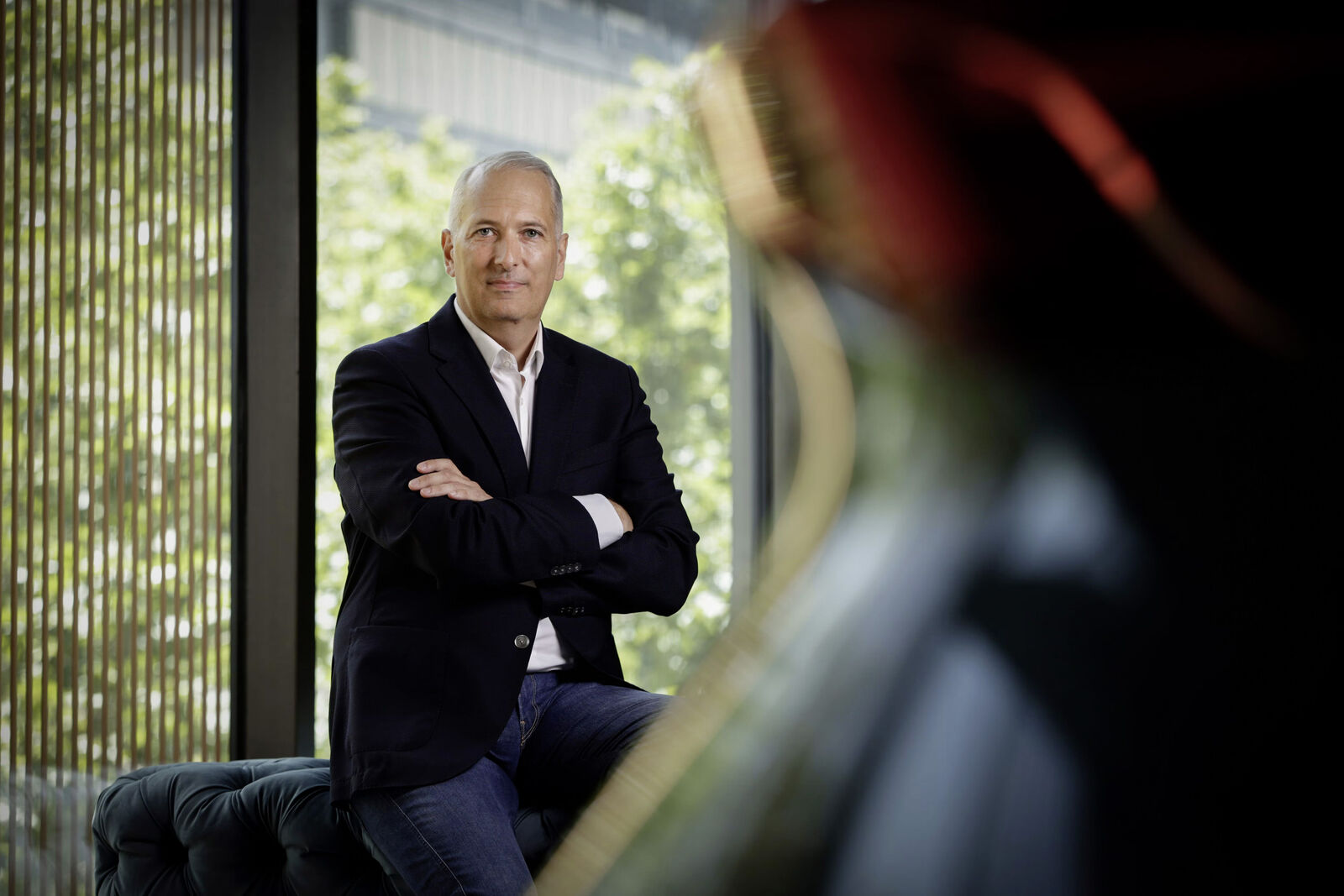
Markus Haupt, Chief Executive Officer SEAT&CUPRA
Škoda Auto
Škoda Auto continued its success story in 2025 and recorded another outstanding financial year.
There was a 7.6% rise in deliveries worldwide to 1.17 million vehicles.
Electric vehicles accounted for over one quarter of deliveries, doubling the previous year’s share. The consistent execution of the “Next Level Efficiency+” performance program had a lasting impact: the operating result grew 9% to 2.5 billion euros. Škoda Auto demonstrated its financial strength and operational excellence with an operating margin of 8.3%. This solid basis enables the company to tackle the transformation of the automotive industry from a position of strength and to continue to invest in future technologies
“2025 was an important milestone for Škoda Auto. We posted record financial results, delivered over one million vehicles and became the third best-selling automotive brand in Europe. Our growth is becoming increasingly global: deliveries in India have more than doubled, we have started production in Vietnam and developed new markets in the Middle East. After more than 130 years, we are still focusing on affordable and innovative mobility. We offer our customers a choice of combustion engine, hybrid and all-electric vehicles. We are taking the next step in 2026 with two important new electric models – the Škoda Epiq and the Škoda Peaq.”
Klaus Zellmer, Chairman of the Board of Management of Škoda Auto
Key figures for the Brand Group Core:
| Key financials | 2025 | 2024 | Change |
| Vehicle sales (thousand units) | 5,125 | 4,960 | 3.3% |
| Sales revenue | 145,202 million € | 140,004 million € | 3.7% |
| Operating result | 6,821 million € | 6,961 million € | -2.0% |
| Operating margin | 4.7% | 5.0% | -0.3%-points |
| Net cash flow | 6,946 million € | 4,680 million € | 48.4% |
Key figures for the brands belonging to the Brand Group Core:
| Vehicle sales | Sales revenue | Operating result | Operating margin | |||||
| 000 units/ mill € | 2025 | 2024 | 2025 | 2024 | 2025 | 2024 | 2025 | 2024 |
| Volkswagen Passenger Cars | 3,104 | 3,109 | 86,570 | 88,262 | 2,612 | 2,587 | 3.0% | 2.9% |
| Volkswagen Commercial Vehicles | 428 | 404 | 16,857 | 15,124 | 245 | 743 | 1.5% | 4.9% |
| SEAT/CUPRA | 657 | 637 | 15,272 | 14,530 | 1 | 633 | 0.0% | 4.4% |
| Škoda Auto | 1,173 | 1,090 | 30,105 | 27,787 | 2,502 | 2,305 | 8.3% | 8.3% |
More information Annual Media Call 2026
Recording
Annual Media Call 2026 - Recording
Media
Media contacts

Jens Katemann
Head of Communications Volkswagen Brand and Brand Group Core
Tel. +49 (0) 152 09127561