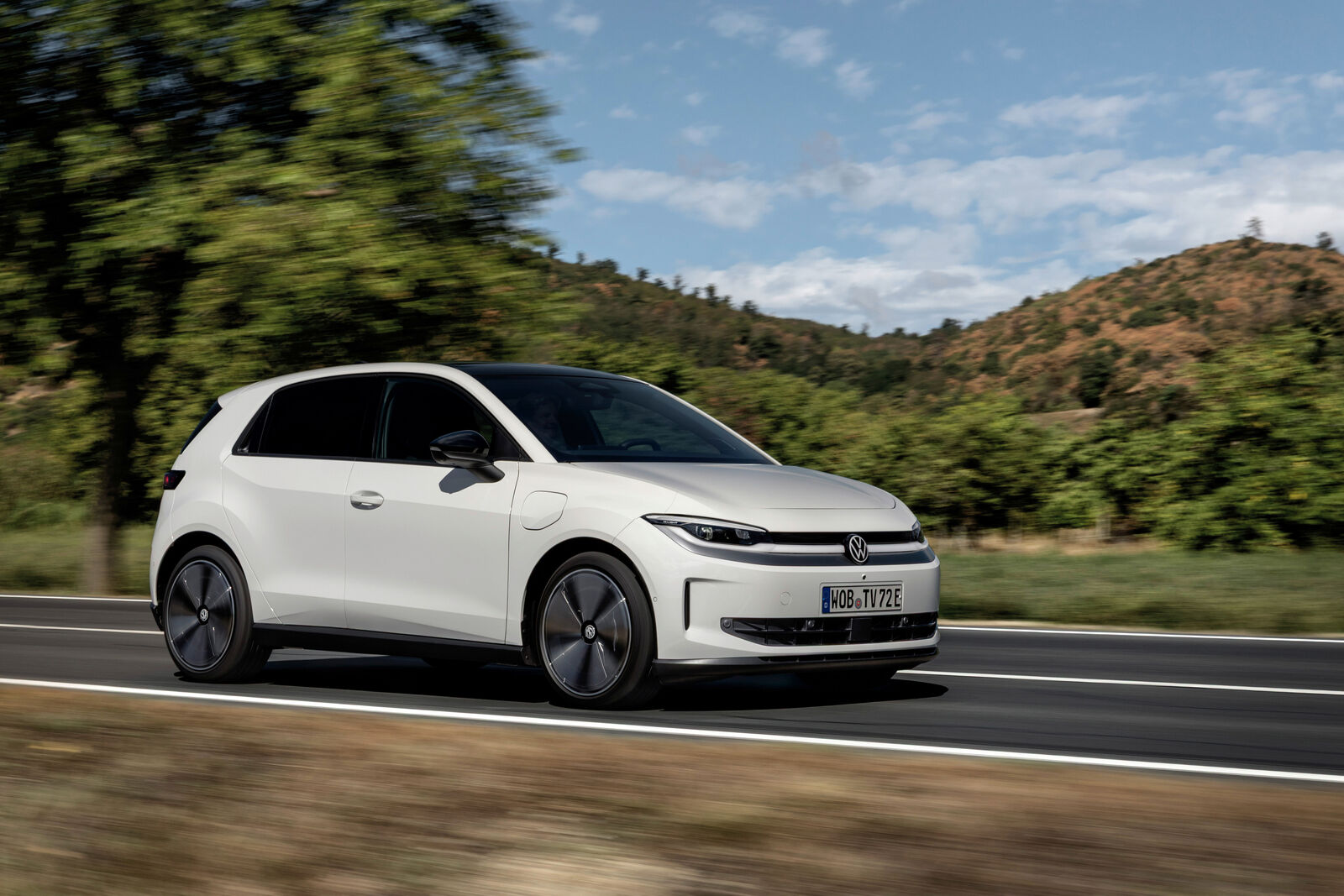
Three power outputs. Three power outputs are currently available for the new ID. Polo: 85 kW (116 PS), 99 kW (135 PS) and 155 kW (211 PS). They generate a maximum torque of 267 Nm (85 and 99 kW) and 290 Nm (155 kW). The maximum drive motor speed is 13,000 rpm (85 and 99 kW) and 15,000 rpm (155 kW).
Two battery sizes. The 85-kW and 99-kW drive motors are coupled to a 37-kWh (net) battery with a DC charging capacity of up to 88 kW. When the ID. Polo is configured with the 155-kW drive motor, there is automatically a 52-kWh (net) battery on board, which can be charged at up to 105 kW at DC quick-charging stations. Both unified cells are a new development created in cooperation with Volkswagen subsidiary PowerCo. The battery system uses cell-to-pack technology, where the cells are combined directly into a battery pack without the intermediate step via module housings. Three of these battery packs together form the energy storage unit. At the same time, the battery housing performs a load-bearing function within the body structure. The 37-kWh battery is a lithium-ferrophosphate version (LFP), while the 52-kWh version is a nickel-manganese-cobalt variant (NMC) with an even higher energy density. Under optimal conditions, the 37-kWh battery is charged from 10 to 80 per cent at 88 kW in approx. 23 minutes at a DC quick-charging station. At maximum DC charging power, energy for a range of 109 km flows into the battery in ten minutes. At maximum charging capacity, the 52-kW battery is charged from 10 to 80 per cent in approx. 24 minutes. With a maximum charging capacity of 105 kW, this battery absorbs energy for 117 km within ten minutes. The AC charging capacity is up to 11 kW in all versions.
Consumption below 14 kWh/100 km. A combined WLTP consumption of 13.8 kWh/100 km has been determined for the ID. Polo Trend with 85 kW (116 PS). With an energy content of 37 kWh, this results in a WLTP range of 323 km. Weighing 1,569 kg (EU kerb weight with driver), the ID. Polo Trend completes the sprint to 100 km/h in 10.6 seconds; its top speed is limited to 160 km/h. The ID. Polo Life and ID. Polo Style also have the identical 37-kWh battery on board as standard; however, their electric drive motor output is higher at 99 kW (135 PS). The WLTP average consumption of the ID. Polo Life (1,575 kg) is 13.6 kW/100 km, allowing it to cover up to 331 km between two charging stops. The ID. Polo reaches a speed of 100 km/h in 9.5 seconds in this configuration. Corresponding values for the ID. Polo Style (1,575 kg) with this battery and output: 13.7 kWh/100 km (WLTP average), 330 km range and also 9.5 seconds for the sprint. The ID. Polo Life and the ID. Polo Style can be optionally ordered with the large 52-kWh battery and an output of 155 kW (211 PS). In this configuration, the Life (1,576 kg) consumes 13.3 kWh/100 km (WLTP average) and has a WLTP range of 454 km. It accelerates from 0 to 100 km/h in just 7.1 seconds. Comparable values were determined for the ID. Polo Style (1,576 kg): 13.4 kWh/100 km (WLTP average), 452 km range and also 7.1 seconds for the sprint. Similarly to the ID. Polo Trend, all other ID. Polos are also limited to 160 km/h.
Optional heat pump. To increase the range at low outside temperatures, Volkswagen offers a heat pump as optional equipment for the ID. Polo. This compresses a refrigerant under high pressure and thus generates heat. It is used to heat cold air inside the vehicle, so the interior heater needs to draw less energy from the high-voltage battery. This can improve the range, especially in winter.
Journeys with a caravan. All ID. Polo models can be configured with a ball coupling (drawbar load: 75 kg). With its detachable and lockable towing bracket, the ID. Polo is able to effortlessly pull the popular small, privately used trailers for all kinds of gardening and shopping tasks. The permissible towing capacity of the 155-kW versions is especially high: they can tow trailers with a total weight of up to 1,200 kg (at 8 and 12% gradients) – enough for a smaller caravan, for example. The drawbar load is also designed for transporting two e-bikes.