Minimalism, lightweight construction and optimal usability. The interior of the Mission Efficiency is a completely new development. In keeping with the character of a pure efficiency vehicle, the team focused on lightweight construction and minimalism. As the vehicle interior follows the new Volkswagen Pure Positive design language, a clearly designed, well-organised and cosy interior space was created, in which every detail is perfectly arranged, both ergonomically and visually. The multifunction steering wheel with a new cover material, the two steering column switches as well as the operating panel for the lights and volume controls have been adopted from the ID. Polo. The latter is accommodated in a visually floating centre console together with the buttons for the power windows, mirror adjustment and air conditioning block. A stowage net for smartphones and two USB-C ports have also been integrated here. The comfortably designed lightweight dash panel is designed as a wraparound and also visually free-floating surface. Stylistically, it is carried over into the doors.
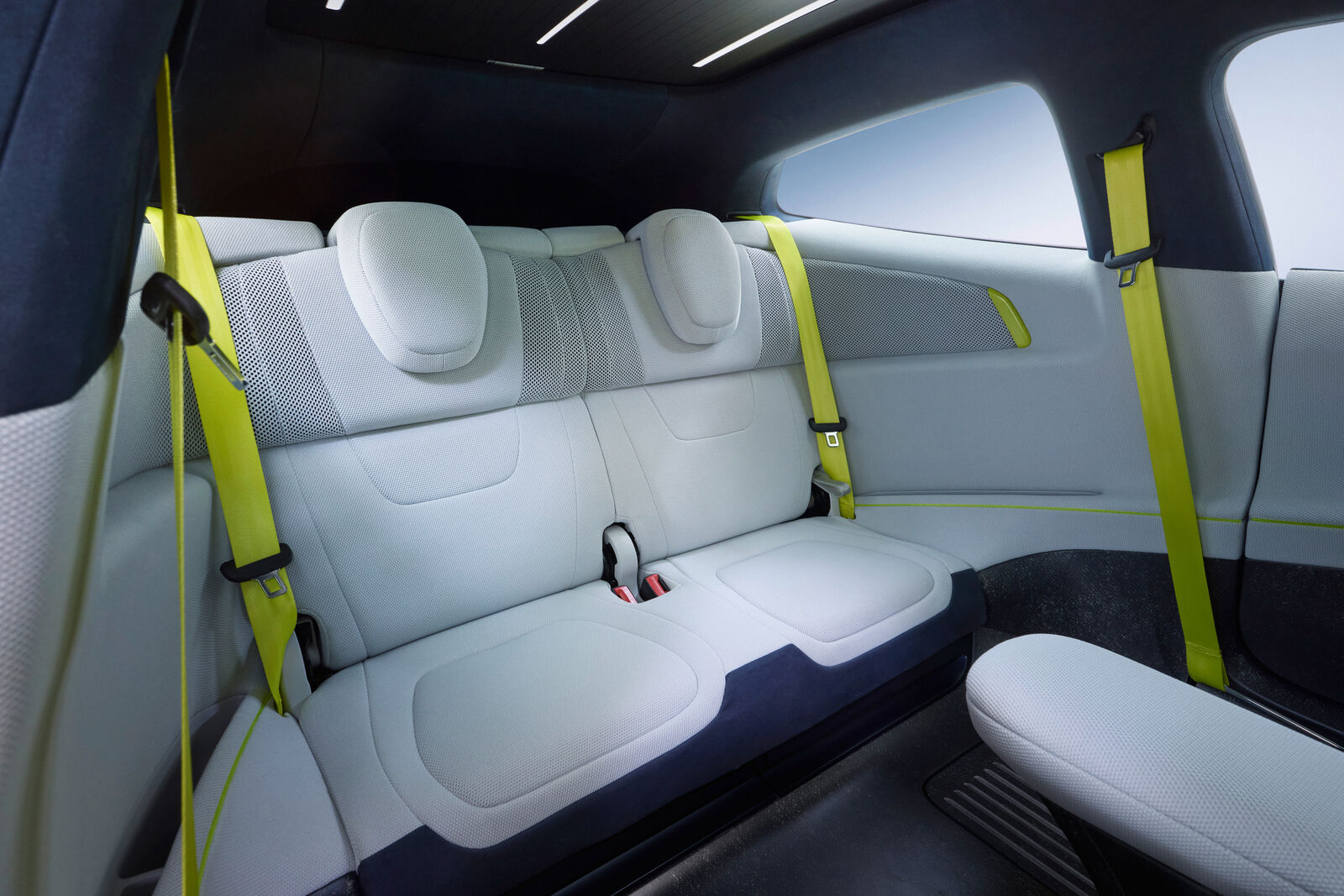
Seats, materials and circularity. A number of pre-development topics were incorporated into the Mission Efficiency in order to meet the requirements for the concept vehicle. For example, the slimline sports seats for the driver and front passenger stand out in the interior. The focus here is on open structures as design elements combining aesthetics with functionality. The transparent and ergonomic head restraints in particular are a real eye-catcher: while the centre is completely open, the side surfaces form a lightweight grid structure consisting of three-dimensional triangle patterns. The 3D structure – printed in-house – is made from an elastic plastic (TPU, thermoplastic polyurethane) which is also used for high-quality sports shoes. The material offers pleasant comfort in the area of the head restraint, visualises technical avant-garde design and is fully recyclable. A background light is integrated in the head restraints. The covers of the seat cushions, which comprise just two elements, have a pleasant touch and feel. The “de-energised” door panels fit into this picture: since they do not have any electrical components such as loudspeakers, background lighting, power windows or mirror adjustment controls, they are fully recyclable as one piece. Even the floor in the interior reflects a new approach and is made of a lightweight composite material. Non-slip rubber studs are integrated into this material, making the otherwise separate floor mats a functional component of the interior floor. The two-part backrest of the newly designed rear bench seat can be folded down, making it extremely suitable for everyday use. This opens up a load compartment with a length of 1.80 m, which can also be used for transporting larger items. In the basic configuration it holds 481 litres when loaded up to the height of the rear seats. Two additional small stowage boxes (2 x 4 litres) have been integrated under the rear bench seat. Last but not least, there are two additional compartments behind the side body panelling of the rear wheels with a volume of 2 x 16 litres.
Portable sound and infotainment. Furthermore, the minimalism achieved in the interior is based on the question as to which features are absolutely essential on a journey and which ones can be omitted. Here are just a few examples: permanently installed speakers were omitted in favour of a mobile Bluetooth box. A flashlight that can be flexibly integrated into the vehicle replaces the ambient lighting. Both devices have their own battery on board and thus do not put additional strain on the vehicle battery. There is also more storage space in the doors without permanently installed loudspeakers. The three drink holders for energy drinks can be seen more as a humorous touch and as a reference to the long-distance characteristics of the marathon electric vehicle. A mechanical clamping rail and a device holder from a 3D printer enable a smartphone or tablet and the torch to be inserted at several positions in the cockpit. The body is designed in such a way that potential owners of such a vehicle can create their own very specific device solution using a 3D printer. Under the motto ‘Bring your own device’, the infotainment functions - such as navigation and the media library – are shown on the user’s own smartphone or tablet. All basic driving functions as well as the air conditioning controls and display via a small separate e-paper display are also available without a mobile device.