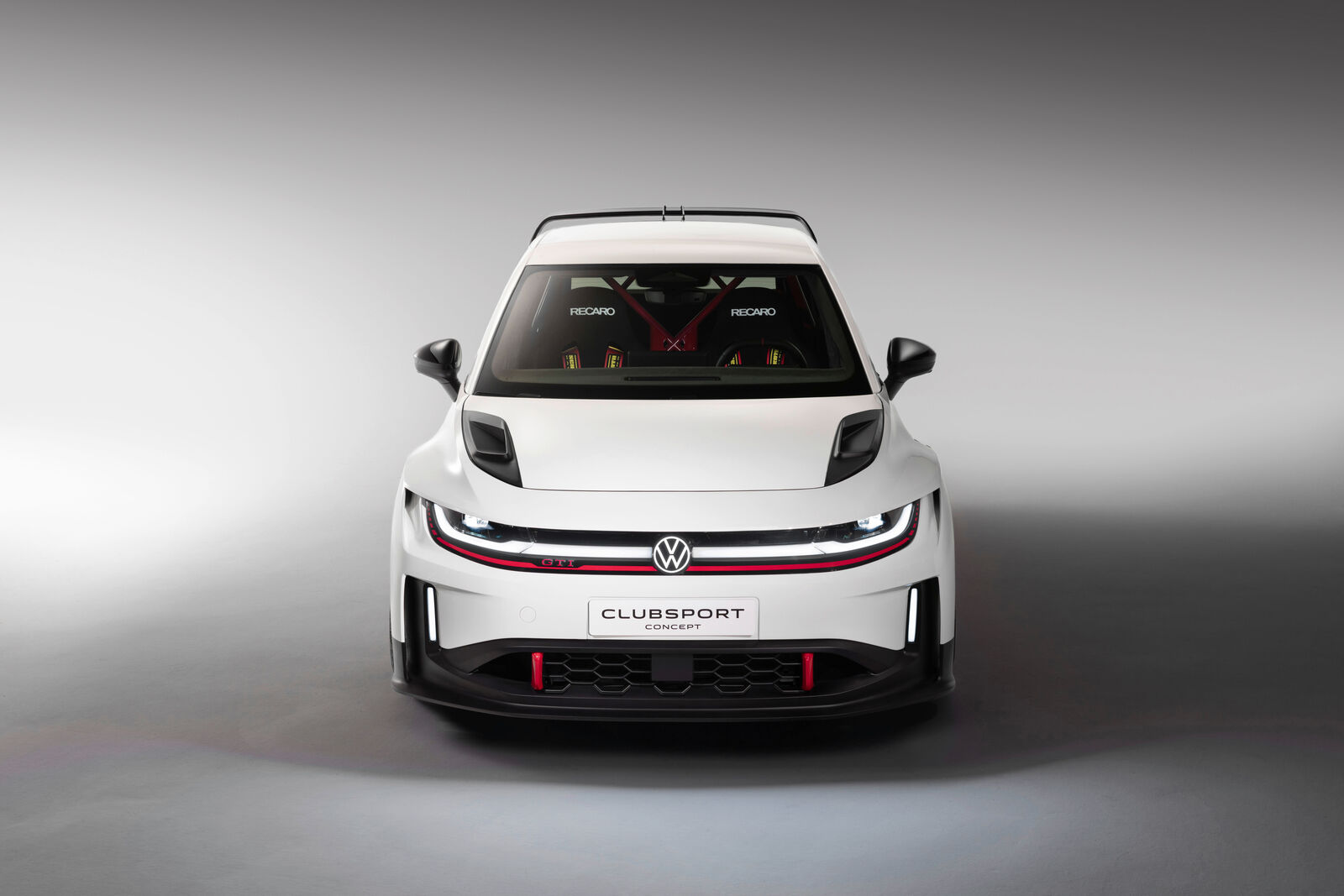
Every millimetre counts. The conversion required a comprehensive overhaul of the body, chassis, high-voltage and cooling systems as well as numerous individual components. This was because the larger APP550 meant the drive output point of the drive shifted 5 millimetres to the rear and 55.5 millimetres upwards. The output point refers to the exact geometric position in the vehicle layout where the drive energy leaves the gearbox and is transmitted to the wheels. Its position largely determines how high and how far forward or backward the entire unit consisting of the electric drive motor and gearbox must be installed in the engine compartment. The new position of the drive changed almost all relevant interfaces in the tightly packed front end of the ID. Polo GTI: the subframe, longitudinal members, stabiliser, assembly mountings and chassis components therefore had to be redesigned as an integrated system. In addition, components such as the high-voltage charger, air conditioning compressor, thermal management module (coolant distribution control) and the water pump were relocated to new positions. To achieve this, specially developed holders, adapters and mounting concepts were created. At the same time, the high-voltage and low-voltage cables as well as coolant and refrigerant lines had to be adapted to the new architecture.
New subframe. A newly designed subframe – the structural interface between the powertrain, chassis, steering and body – played a key role in the adaptation of the APP550 for the ID. Polo GTI Clubsport Concept. The geometry of the subframe had to take into account attachment of the transverse links, stabiliser and assembly mountings as well as the compact installation spaces of the body.