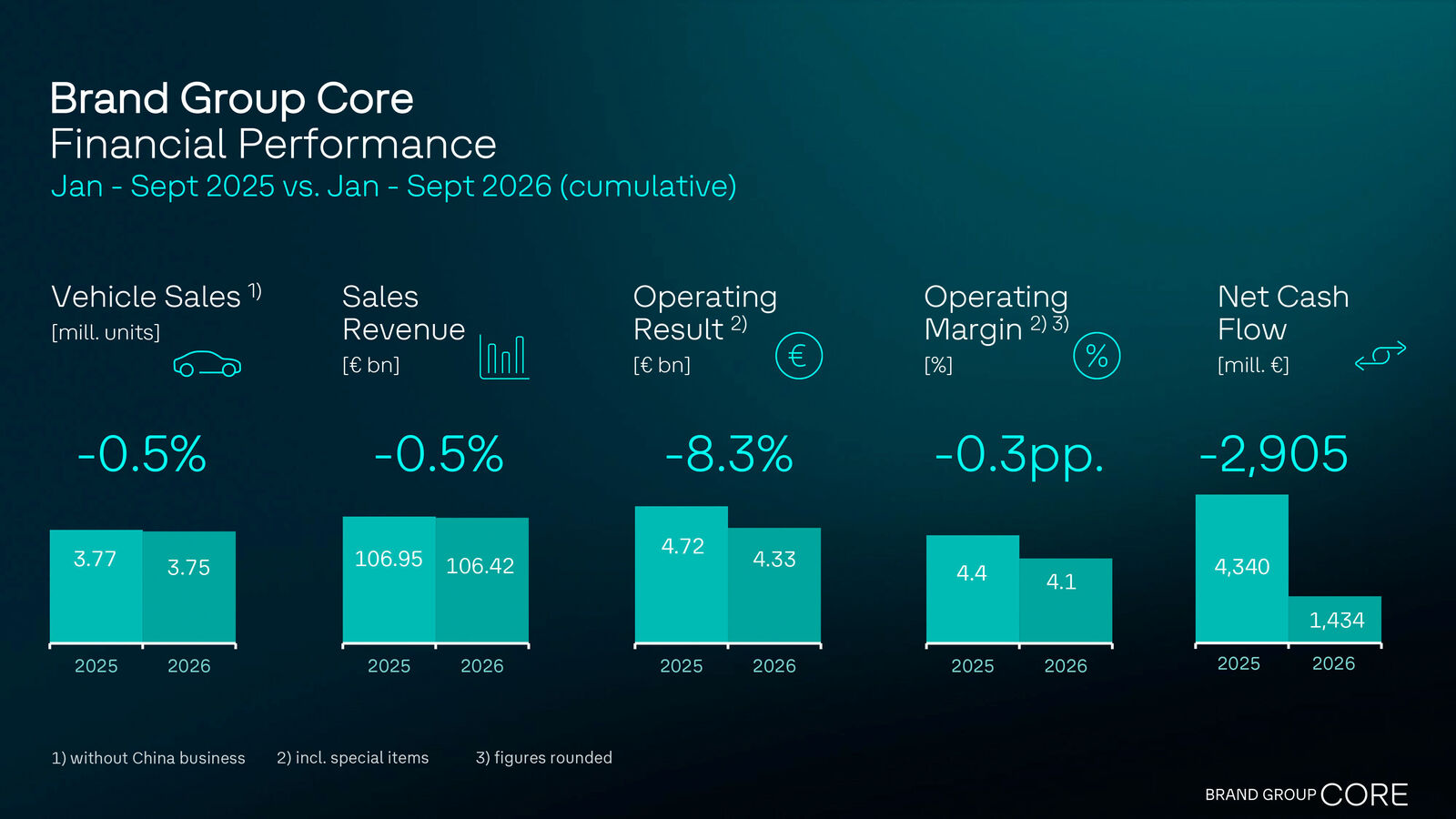
Overall, operating performance was affected by a further deterioration in market conditions. Intensifying competition, higher expenditure on sales incentives, and negative mix effects put pressure on the operating margin across the entire brand group. Ongoing performance programs and initiatives to improve the cost base within the Brand Group Core are having a positive overall impact.
Driven by high fuel prices and government incentives, demand for battery-electric vehicles (BEVs) accelerated significantly, particularly in the German market.
However, this transition to BEVs is coming at the expense of volumes, and above all, to the detriment of the earnings contribution from higher-margin internal combustion engine (ICE) models.
In addition, earnings performance in the first nine months of 2026 was adversely affected by significant special items, particularly restructuring expenses, the planned sale of Volkswagen Osnabrück GmbH, and the discontinuation of ID.4 production in Chattanooga which has already been implemented.
This led in particular to a decline in the operating margin of the Volkswagen Passenger Cars brand to 1.3%, significantly below the original expectations. Excluding the special items mentioned above, the Volkswagen brand’s operating margin after Q3 would have been 2.6%, while the BGC’s operating margin would have stood at 4.9%.
The brand group’s result was bolstered by the continued strong performance of the Škoda brand, which recorded a convincing operating margin of 8.3%.
Volkswagen Commercial Vehicles achieved an operating margin of 3.8 %, while SEAT & CUPRA posted an operating margin of 0.1%.